
A bottle of hydrochloric acid in the wrong cabinet can trigger a serious safety incident. Mixed chemicals on a factory floor? The consequences don’t bear thinking about.When it comes to storing corrosive chemicals, picking the right cabinet is just step one. Knowing what goes in, what doesn’t, and how to store it safely — that’s what actually protects your people and your facility.
PP (polypropylene) acid cabinets are the mainstream choice for corrosive chemical storage. But PP isn’t bulletproof — some chemicals are perfectly safe inside, while others can actually make things worse. This guide breaks down PP cabinet chemical compatibility so you can make informed decisions and avoid costly mistakes.
Why Polypropylene Works for Corrosive Storage
The reason PP has become the go-to material for acid and alkali cabinets comes down to one thing: chemical inertness. Polypropylene has a highly stable molecular structure that doesn’t react with most strong acids or bases, and it won’t corrode.
Compared to metal cabinets, PP has several built-in advantages:
- No rust, ever — eliminates the corrosion problem entirely
- Impact-resistant — PP sheet material is tough and won’t crack from everyday bumps
- Non-reactive — doesn’t interact with stored chemicals or contaminate them
- Easy to clean — smooth surface, chemical spills wipe right off
But here’s the catch — PP’s chemical resistance has limits. Some chemicals can cause PP to swell, deform, or even crack over prolonged contact. Understanding compatibility matters more than anything else.
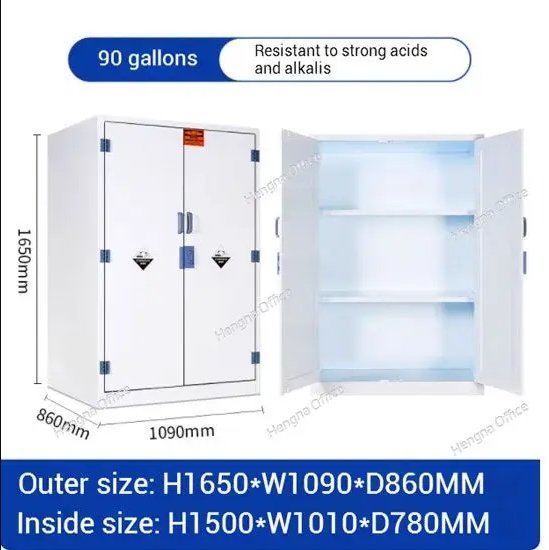
Key Features of a Qualified Polypropylene Acid Cabinet
Don’t just look at the exterior — these features directly affect storage safety:
1. Seamless Welded Body
The cabinet body is constructed using PP sheet heat-welded into a single unit, with 100% leak-proof seams at the bottom and joints. Even if chemicals spill inside, nothing leaks out to contaminate the surrounding area.
2. Acid-Resistant Adjustable Shelves
Shelves feature spill-containment lips — if a bottle tips over, the liquid stays on that shelf instead of cascading down. Shelf height is adjustable to accommodate different bottle sizes and chemical drums.
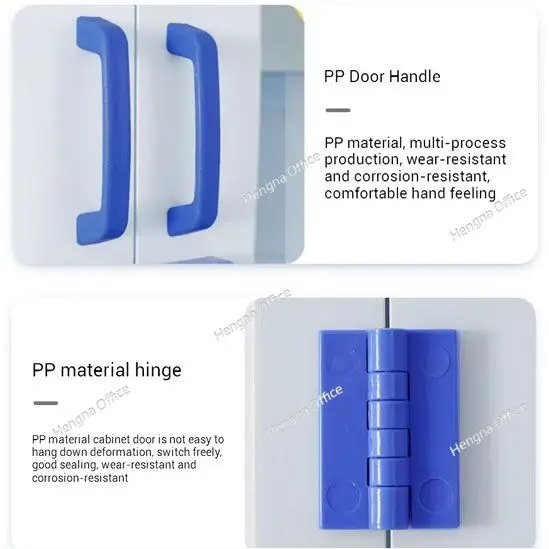
3. All-Plastic Hardware
Hinges, door handles, and locks are all made from PP. This is easy to overlook — metal hinges will corrode quickly in an acid-alkali environment, causing doors to warp or jam shut.
4. Dual Ventilation Ports
One vent on each side prevents volatile gas buildup inside the cabinet. When storing volatile acids like hydrochloric or nitric acid, connecting exhaust ducting is strongly recommended.
5. Double Lock System
Two separate locks prevent unauthorized access to hazardous chemicals, meeting standard laboratory safety management requirements.
6. Corrosive Warning Labels
Cabinets come with standard corrosive material warning labels for quick identification during routine safety inspections.
What Can and Can’t Be Stored in a PP Acid Cabinet?
This is the most important section of this guide. The two tables below are worth bookmarking.
✅ Chemicals Safe for PP Cabinet Storage
| Chemical Category | Common Examples | Storage Notes |
|---|---|---|
| Strong Inorganic Acids | Sulfuric acid, hydrochloric acid, nitric acid | Core use case for PP cabinets — excellent compatibility |
| Strong Bases | Sodium hydroxide, potassium hydroxide, ammonia | PP has outstanding alkali resistance |
| Weak Organic Acids | Glacial acetic acid, citric acid, oxalic acid | Good compatibility at room temperature |
| Low-Concentration Oxidizers | Dilute hydrogen peroxide, sodium hypochlorite | Check concentration limits; confirm for high concentrations |
| Salt Solutions | Chlorides, sulfates, nitrates in solution | Good compatibility |
| Alcohols (Short-Term) | Ethanol, isopropanol, methanol | Acceptable for short-term storage; use dedicated cabinets for long-term |
❌ Chemicals NOT Recommended for PP Cabinets
| Chemical Category | Common Examples | Reason | Recommended Alternative |
|---|---|---|---|
| Flammable Liquids | Acetone, toluene, xylene, gasoline | PP cabinets are not fire-rated | FM-approved flammable safety cabinet |
| High-Concentration Oxidizers | Concentrated H₂O₂, perchloric acid | May react with PP material | Dedicated oxidizer storage cabinet |
| Halogenated Hydrocarbons | Chloroform, carbon tetrachloride | Long-term contact may cause PP to swell | Specialized chemical cabinet |
| Non-Polar Solvents | Benzene, n-hexane | May penetrate PP material | Flammable safety cabinet |
Quick rule: corrosives go in PP cabinets, flammables go in fire-rated cabinets. They serve different purposes — don’t mix them up.
7 Key Factors Affecting Safe Storage
Knowing what to store is half the battle. How you store it matters just as much. Here are the most common problem areas in real-world use:
| Factor | Risk | Recommendation |
|---|---|---|
| Chemical Concentration | Higher concentration means stronger corrosive effect | Confirm the PP cabinet’s concentration range; special specs may be needed |
| Ambient Temperature | Heat accelerates material aging and chemical reactions | Keep PP cabinets within the specified temperature range, away from heat sources |
| Ventilation | Volatile gas buildup creates safety hazards | Always connect exhaust ducting for volatile chemicals |
| Chemical Segregation | Incompatible chemicals stored together can react dangerously | Store acids and bases separately; keep oxidizers isolated |
| Shelf Loading | Overloading can warp shelves and tip containers | Place heavy drums on lower shelves; follow manufacturer guidelines |
| Leak Protection | Accidental spills can contaminate the environment and endanger personnel | Regularly inspect cabinet integrity; ensure leak-proof design is intact |
| Label Management | Unlabeled chemicals are hard to identify in an emergency | All chemicals must be labeled; maintain a chemical inventory log |
Common Application Scenarios
90-gallon PP acid cabinets are most frequently used in:
- University & Research Laboratories — wide variety of teaching and research chemicals, centralized storage saves space
- Semiconductor & Electronics Cleanrooms — PP produces no metal ion contamination; all-plastic hardware prevents particle shedding
- Pharmaceutical & Chemical R&D Centers — strong corrosive reagents require safe, isolated storage
- Industrial Electroplating & Surface Treatment — plating solutions and pickling acids stored on-site for easy access
- Water Treatment Facilities — safe storage of treatment chemicals (pH adjusters, disinfectants)
- Hospital & Clinical Laboratories — standardized management of test reagents and chemicals
Summary
PP acid cabinets are a reliable choice for corrosive chemical storage — but only when used correctly with the right chemicals. Three things to remember:
- Strong acids and bases are safe — sulfuric acid, hydrochloric acid, nitric acid, sodium hydroxide are the core use cases for PP cabinets
- Keep flammables out — acetone, toluene, and similar chemicals belong in fire-rated cabinets, not PP cabinets
- Don’t skip ventilation and segregation — volatile chemicals need exhaust ducting, incompatible chemicals need separate storage
If you’re sourcing acid and alkali storage cabinets for your lab or facility, or if you have questions about specific chemical compatibility, get in touch with us. Tell us what chemicals you need to store and we’ll recommend the right solution for your situation.