
October 14, 2026
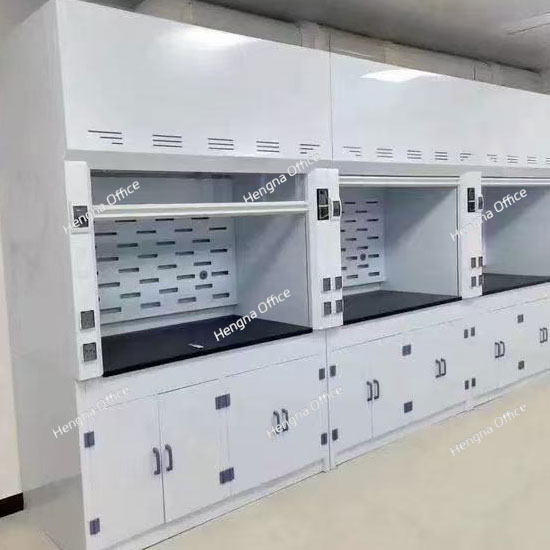
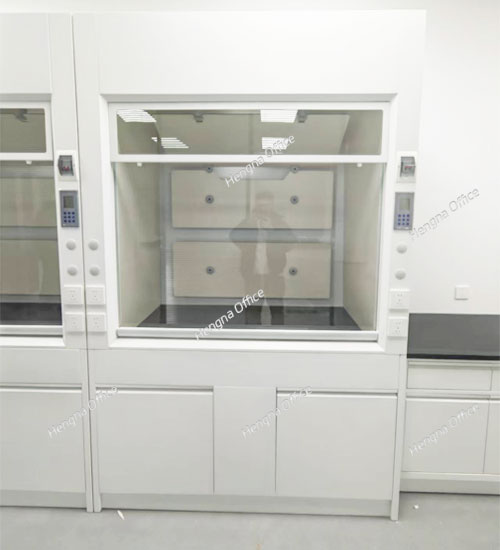
A full-height fume hood takes a square meter of floor before it captures a single vapor. Most teaching labs and QC benches do not have that square meter to spare — but they do have a free stretch of worktop. That is the whole argument for a benchtop hood: the same containment, sitting on the surface you already own. Our ducted benchtop models come in 1200mm, 1500mm and 1800mm widths, built in powder-coated steel with tempered-glass viewing panels, designed around a 0.5 m/s face velocity. They suit labs that have ductwork but no room for a full-height unit. Full-height hoods assume one thing: floor space. In teaching labs, school chemistry rooms and compact QC benches that assumption fails — the floor is already spoken for, while the worktop has a free meter. A benchtop hood turns that meter into a contained working zone: vapors from stains, solvents and etching steps are captured at the source and ducted out, with the operator working behind glass. Ducted, Not Filtered: Why We Build Ducted Benchtop hoods come in two families: ductless units with carbon filters, and ducted units connected to exhaust ducting. We build ducted. The reason is performance over time — a ducted hood keeps constant capture because airflow does not depend on a filter that saturates and needs replacing on a schedule. For labs with existing ductwork or a wall exhaust route, ducted is the version that never asks you to remember a filter change. Three Widths, One Line The line comes in three widths, so the hood matches the work zone rather than the other way around. The body is steel with a powder-coated finish; the viewing panels are tempered glass for clarity and impact resistance. The sash opens for loading and closes to the working height during operation. Width…
October 11, 2026
A fume hood that has run hot hydrochloric acid for three years does not fail where the specification sheet suggests. It fails at the sash drive — the rollers, the cables, the bearing points — while the chamber walls behind them are still intact. That is the observation that shapes how an acid-resistant hood should be specified. Acid digestion attacks a hood from the inside: hot acid vapors condense on every surface they touch, and a standard powder-coated steel chamber starts showing corrosion at the seams within months. Two construction routes survive it, and the right one depends on the acids, the temperatures and how often the work runs. Route One: Welded PP Body for the Strongest Chemistry Our PP fume hood uses an 8mm polypropylene body with welded, same-material joints — no coating to chip, no base metal to rust, no seams glued with anything that solvents can open. Polypropylene shrugs off the strong acids and alkalis that digest samples for analysis: aqua-regia-class work, hydrofluoric processes and daily hot acid duty are the cases we route to PP. The trade-offs are temperature limits and surface hardness — PP is the corrosion specialist, not a general workhorse. Route Two: Steel Body with an Anti-Corrosion Sync-Belt Sash Drive Our steel fume hood line (F2 and F4 models) solves a different failure point: the sash drive. Conventional hoods move the glass sash on rollers and cables that corrode and jam in acid environments, so maintenance becomes a recurring cost. The F2 and F4 use an anti-corrosion sync-belt drive: a 0.65mm galvanized steel-wire belt rated for 35kg sash load, tested against sulfuric acid exposure by a third party for anti-corrosion performance and tensile strength. The belt needs no lubrication, and the rollers are 26mm silicone — quieter, and without the wobble that worn…
June 15, 2025
Laboratory Fume Hood – Efficient Exhaust/Safety Protection/Suitable for Laboratory Scenarios Applicable Scenarios – The “Safety Barrier” of LaboratoriesIt is highly focused on various laboratory scenarios, building a solid safety line for different laboratory work:General Chemical Laboratories: In routine chemical analysis operations such as acid – base neutralization, reagent mixing, and sample digestion, acid – base mists and chemical volatiles are generated. The fume hood promptly captures and exhausts these substances, preventing them from diffusing and corroding instruments, affecting laboratory results, and more importantly, protecting laboratory personnel from harm.Water Quality Testing Laboratories: When processing water quality samples such as sewage and drinking water, foul gases and odors from microbial metabolism may be released. The fume hood quickly exhausts air, maintaining a fresh air environment in the laboratory, avoiding odor interference with the olfactory judgment of testing personnel, and ensuring the accuracy of water quality testing data.Food Testing Laboratories: During experiments such as food component analysis and microbial testing, the processing of food samples (such as grinding, cooking) will produce odors and fine dust. The fume hood effectively exhausts these pollutants, preventing cross – contamination of food samples, ensuring the reliability of testing results, and safeguarding the rigor of food safety laboratory work.II. Core Advantages – Efficient, Durable, and Convenient(I) High – Quality Materials, Sturdy and DurableThe cabinet is made of corrosion – resistant and high – strength materials and processed with fine craftsmanship. The surface is smooth and easy to clean, capable of withstanding the erosion of common acid – base reagents and water vapor in the laboratory. It will not deform or rust after long – term use, providing a solid “body” for the stable operation of the fume hood, suitable for the complex and long – term use requirements of laboratories.(II) Efficient Air Exhaust, Purifying the EnvironmentIt adopts a…
June 15, 2025
2350×1500×850mm Standard Laboratory Fume Hood – Efficient and Safe ProfessionalI. Precisely Adapted Scenarios – The “Safety Guardian” of Professional LabsIt is deeply focused on various professional laboratories, such as chemical laboratories, biological laboratories, and material research and development laboratories, to safeguard experimental operations:Chemical Laboratories: When conducting experiments such as acid – base titration, organic synthesis, and reagent preparation, various harmful gases and acid – base mists are generated. This fume hood can quickly capture and exhaust these pollutants, protecting experimental personnel from harm and preventing corrosive gases from damaging laboratory equipment.Biological Laboratories: During the processing of biological samples, bacterial culture, gene manipulation and other experimental processes, potential dangerous substances such as bio – aerosols may be generated. The fume hood can effectively isolate and exhaust them, maintaining a biologically safe environment in the laboratory and ensuring the accuracy of experimental data and the health of personnel.Material Research and Development Laboratories: During experimental links such as material synthesis, surface treatment, and high – temperature sintering, dust and harmful gases are released. The fume hood timely exhausts these pollutants, providing a clean and safe operation space for the research and development of new materials and facilitating scientific research innovation.II. Hard – Core Quality Support – High – Quality Materials and Fine Configuration(I) Cabinet Material: A Sturdy and Durable “Protective Barrier”The cabinet is made of 1.0mm – thick electrolytic steel plate, processed by the electrostatic spraying of epoxy resin powder and high – temperature curing process. The electrolytic steel plate has high strength and good ductility, and the electrostatically sprayed epoxy resin powder coating is uniform and dense:Durability: It can withstand collisions and friction during daily laboratory operations, without deformation or damage after long – term use, providing a stable structural support for the fume hood.Corrosion and Rust Prevention: It effectively resists the…