
September 16, 2026
Quick answer: Rust on a steel lab bench starts where the powder coating fails — at scratches, weld seams, and worktop joints. Prevent it by touching up scratches within 24 hours, sealing joints with neutral-cure silicone, cleaning at pH 6 to 8, holding indoor humidity below 60%, and buying from suppliers who can show a 48-hour salt spray report. For coastal and high-humidity labs, skip straight to a 304 stainless steel frame or a full PP bench. Every lab in a hot, humid region knows the pattern. A steel lab bench looks fine in its first year. By year three, yellow stains show up at the welds. Then small rust dots appear along the frame. The first reaction is usually to blame the steel. In most cases the real cause is different: a damaged coating plus daily handling. Steel stays rust-free only while its coating stays intact. Once the coating is broken, cold-rolled steel will not survive constant moisture for long. We disassembled returned benches at our factory to study this. The pattern is consistent: rust almost always starts where the coating failed, not where the steel is thinnest. This guide covers where rust comes from, seven ways to stop it, and the point where replacement makes more sense than repair. Where Rust on a Steel Lab Bench Actually Comes From Three sources, in order of how often they show up. A broken powder coating Cold-rolled steel frames depend on electrostatic powder coating for corrosion resistance. A proper coat runs 60 to 80 microns thick. Transport knocks, repeated screw removal, and sharp lab tools can all cut through it. Each exposed spot becomes a rust starting point. The steel under the coating is not bad steel. It is simply bare steel, and bare steel plus constant moisture equals rust. Coastal…
July 31, 2026
Last month I talked to an EHS manager at a chemical plant. He said something that stuck with me: “I replace my steel cabinet every two years. I’m used to it.” He stores HCl and sulfuric acid. By year two, the bottom panel starts leaking. So he swaps it out. He didn’t think twice about it — “it’s cheap enough, just replace it.” I get that logic. But the math doesn’t add up. Replace a steel cabinet every two years. Add the labor of transferring chemicals, disposing of the old unit, and the risk of one leak hitting the floor before you catch it. By the time you add it all up, you’re not saving anything. The real problem is: most people don’t know when their steel cabinet is past its limit. This post gives you four clear signs — plus a self-check to tell you whether it’s time to switch. 4 Signs It’s Time to Replace — If You Have Two, Replace It Sign 1: Hinges feel stiff and show rust dust This is the earliest sign. Steel hinges oxidize fast in acid vapor. First the door feels “sticky” when you open it. Then brown rust dust shows up in the hinge gap. Leave it too long and the door won’t seal properly — corrosive gas leaks from the gap. Some people oil the hinges. That doesn’t fix anything. The hinge is still steel, the acid vapor is still attacking it. Oil is a band-aid, not a fix. Sign 2: Bottom panel shows blisters or rust spots HCl and H2SO4 vapor is heavier than air. It sinks and collects at the bottom. This is the first place a steel cabinet fails. Get down and look at your cabinet floor. If you see quarter-sized blisters, rust spots, or paint bubbles…
July 26, 2026
Last week I got an email from a lab buyer at a university. He asked a simple question: “What do I actually look for when buying an acid alkali cabinet?” He’d read a dozen guides. Most said the same thing — “check the material, check the size, check the price.” Technically not wrong. But none of them told him what actually matters. Acid cabinets are different. You’re not storing paper or tools. You’re storing things that eat through metal. Hydrochloric acid. Sulfuric acid. Nitric acid. Sodium hydroxide. One spill and you’ve got a real problem. So the buying logic changes. Not “which looks good” but “which survives the stuff I put in it.” This guide skips the fluff. Four things you need to know. How to Choose an Acid Alkali Cabinet for Your Lab — A No-BS Guide That Skips the Rust Step 1: What You Store Determines What You Buy The chemical you store decides the cabinet you need. That order matters — most people get it backwards. Hydrochloric / Sulfuric / Nitric Acid — The cabinet killers. Their vapors are heavier than air. They sink to the bottom. Steel cabinets have a paint coating on top. One chip in that coating and acid starts eating the metal underneath. Two years in, the bottom panel’s gone. We saw this at a chemical plant QC lab in Southeast Asia. A 90-gallon steel acid cabinet storing HCl and nitric acid. Year three, bottom rusted through. Acid hit the floor. Only the spill tray saved them. Sodium Hydroxide / Potassium Hydroxide — Most people don’t know this, but strong bases corrode steel just as fast as acids. Steel shelves develop bubbles, peeling, warping. Six months is enough to see real damage. Organic Solvents — Fair warning: PP cabinets can’t take strong oxidizing acids long-term (fuming…
July 20, 2026
Last year I got an email from an EHS manager at a university chemistry lab in the Middle East. Their steel acid cabinet was less than 3 years old. The hinges had rusted shut. The bottom panel had perforated from hydrochloric acid vapor. One shelf had collapsed. He asked a simple question: keep replacing steel, or try PP? If you’re weighing PP vs steel acid cabinet for long-term lab storage, this post gives you a real 5-year comparison. Not spec-sheet theory. What actually happens in a working lab, month by month. What happens to a steel acid cabinet after 5 years Steel cabinets aren’t useless. For non-corrosive chemicals, they do the job fine. But store hydrochloric, sulfuric, nitric acid, or sodium hydroxide — the strong stuff — and the lifespan drops fast. Year 1: Looks perfect. The epoxy coating keeps metal off the acid. But one dent that exposes bare steel starts the clock. Corrosion begins the day the coating breaks. Year 2: Hinges go first. Metal hinges oxidize in acid vapor. Doors start squeaking, then jam. Rust spots show up at the weld seams on the bottom panel. Year 3: Bottom perforates. HCl and H2SO4 vapor is heavier than air. It sinks and pools at the base, eating the metal long-term. We saw this at a chemical plant QC lab in Southeast Asia — a 90-gallon steel acid cabinet storing HCl and nitric acid. Bottom rusted through in 3 years. Acid hit the floor. Only the spill tray caught it. Year 4-5: Shelf load drops. Rust weakens the frame. Shelves sag and warp. Opening the door becomes a risk — the shelf and its bottles might come down together. Steel fits when: you store non-corrosive solids, the lab has good ventilation, the cabinet gets replaced within 1-2 years, or the budget is locked tight and regular…
April 23, 2026
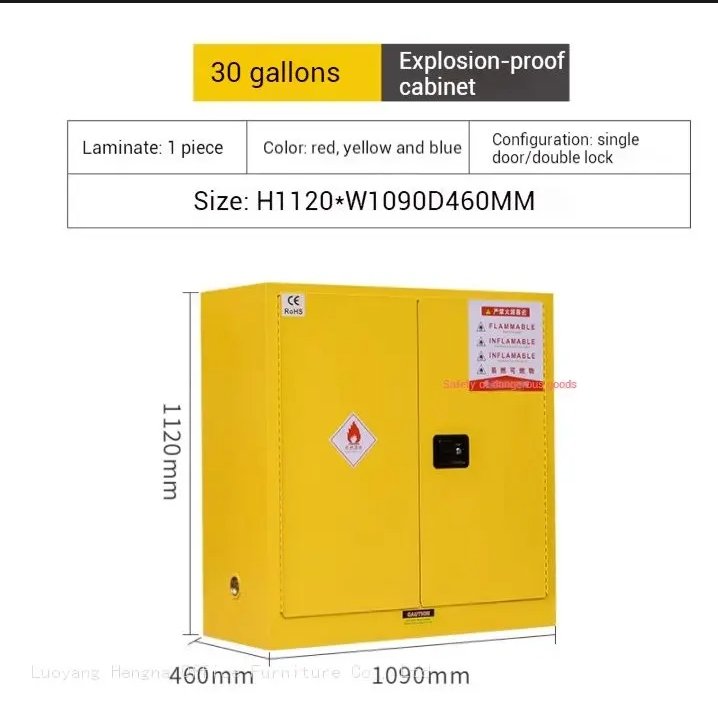
Selecting the right capacity for your flammable safety cabinet is one of the most practical decisions in setting up a compliant chemical storage area — and one of the most commonly overlooked. Choose a cabinet that’s too large and you’re paying for unused floor space. Choose one that’s too small and you end up with improperly stored containers sitting on workbenches or next to open flames. The three most widely used sizes on the market are 22 gallon, 30 gallon, and 45 gallon. Each serves a distinct purpose based on the volume of chemicals you handle, the floor space available, and the nature of your operation. This guide breaks down the key differences and helps you pick the right size for your facility. 22, 30, or 45 Gallon Flammable Storage Cabinet Size Quick Comparison Before diving into specific use cases, here’s a side-by-side look at the core specifications: Specification 22 Gallon 30 Gallon 45 Gallon Usable Volume Approx. 83 Liters Approx. 114 Liters Approx. 170 Liters Relative Capacity 1x (Baseline) 1.37x 2.05x Typical Height ~1650mm (65″) ~1650mm (65″) ~1650mm (65″) Typical Width ~590mm (23″) ~790mm (31″) ~1090mm (43″) Typical Depth ~460mm (18″) ~460mm (18″) ~460mm (18″) Standard Shelves 2 2–3 3 Floor Footprint ~0.27 m² (2.9 ft²) ~0.36 m² (3.9 ft²) ~0.50 m² (5.4 ft²) Key takeaway: All three sizes share roughly the same height. The difference is almost entirely in width. That means upgrading from 22 to 45 gallons doesn’t require more vertical clearance — just more wall space. This is worth knowing if ceiling height is a constraint in your facility. 22 Gallon Flammable Safety Cabinet: Best for Smaller Storage Needs The 22 gallon cabinet is the most compact option and works well in environments where chemical volume is moderate and floor space is at a premium. Ideal use…
April 9, 2026
A bottle of hydrochloric acid in the wrong cabinet can trigger a serious safety incident. Mixed chemicals on a factory floor? The consequences don’t bear thinking about.When it comes to storing corrosive chemicals, picking the right cabinet is just step one. Knowing what goes in, what doesn’t, and how to store it safely — that’s what actually protects your people and your facility. PP (polypropylene) acid cabinets are the mainstream choice for corrosive chemical storage. But PP isn’t bulletproof — some chemicals are perfectly safe inside, while others can actually make things worse. This guide breaks down PP cabinet chemical compatibility so you can make informed decisions and avoid costly mistakes. Why Polypropylene Works for Corrosive Storage The reason PP has become the go-to material for acid and alkali cabinets comes down to one thing: chemical inertness. Polypropylene has a highly stable molecular structure that doesn’t react with most strong acids or bases, and it won’t corrode. Compared to metal cabinets, PP has several built-in advantages: But here’s the catch — PP’s chemical resistance has limits. Some chemicals can cause PP to swell, deform, or even crack over prolonged contact. Understanding compatibility matters more than anything else. Key Features of a Qualified Polypropylene Acid Cabinet Don’t just look at the exterior — these features directly affect storage safety: 1. Seamless Welded BodyThe cabinet body is constructed using PP sheet heat-welded into a single unit, with 100% leak-proof seams at the bottom and joints. Even if chemicals spill inside, nothing leaks out to contaminate the surrounding area. 2. Acid-Resistant Adjustable ShelvesShelves feature spill-containment lips — if a bottle tips over, the liquid stays on that shelf instead of cascading down. Shelf height is adjustable to accommodate different bottle sizes and chemical drums. 3. All-Plastic HardwareHinges, door handles, and locks are all made from PP. This…
April 2, 2026
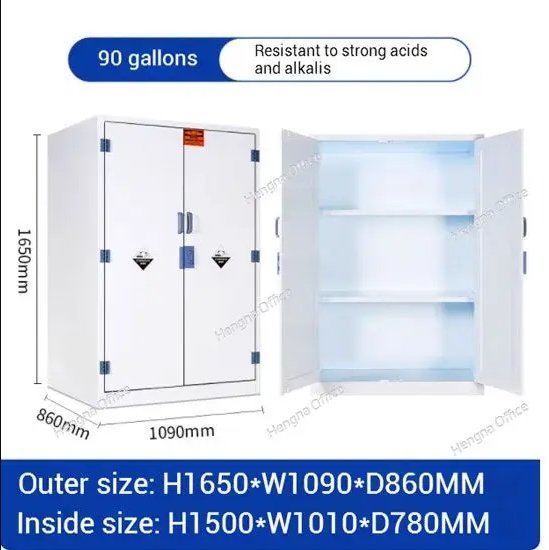
What’s the right cabinet for storing strong acids and alkalis in your lab? It sounds like a simple question, but getting it wrong can lead to serious consequences — corroded metal cabinets, chemical leaks, safety incidents. None of these are things you want to deal with.PP (polypropylene) corrosive storage cabinets have become the go-to choice for laboratories and industrial facilities that handle aggressive chemicals. The 90-gallon size, in particular, hits a sweet spot — large enough capacity, reasonable footprint, and it’s often the first spec procurement managers look at. This guide breaks down the key things you need to consider when selecting a 90-gallon PP acid and alkali cabinet, based on real-world selection experience rather than marketing fluff. 1. Why PP Material for Corrosive Storage? Here’s the bottom line: for strong acids and alkalis, PP is the most reliable material available. Period. PP (polypropylene) has excellent chemical resistance. It tolerates most strong acids and bases without degrading — sulfuric acid, hydrochloric acid, nitric acid, sodium hydroxide, you name it. Store them in a PP cabinet and the cabinet won’t be affected. Compare that to traditional metal cabinets — even epoxy-coated steel ones. Prolonged exposure to strong acids and alkalis causes the coating to blister and peel, exposing the metal underneath to rapid rust and eventual perforation. That’s an unacceptable risk in any lab environment. PP material also brings several inherent advantages: Important: PP cabinets are designed for corrosive chemicals, not flammable liquids. Fire protection is a separate requirement that calls for dedicated flammable storage cabinets. 2. Key Components of a 90 gallon PP corrosive chemical storage cabinet Don’t just look at the exterior — the internal structure and hardware details are what separate a good cabinet from a mediocre one. Pay close attention to these components: 1. Seamless Welded Structure The cabinet…

February 23, 2026
In the fast-paced world of car repair and professional spray painting, danger is often right in front of you. These everyday items, like the gallon of high-quality thinner on the workbench or the cans of flammable primer in the corner, are basically “liquid fire” waiting for something to set them off. In today’s auto shops, the question isn’t whether you need professional storage; it’s whether your current storage would survive a flash fire. This is where the Explosion Proof Cabinet goes from being a “compliance checkbox” to a life-saving tool. In this guide, we go into great detail about the technical features that make these cabinets the best choice for handling dangerous materials. Explosion Proof Cabinets for Automotive|Why “Good Enough” Storage is Dangerous VOCs are often in the air in a spray booth or a 4S service center. A single static spark from a technician’s jacket or a rogue spark from a grinder can turn a workshop into a disaster zone in seconds. The rules from OSHA (Occupational Safety and Health Administration) and the NFPA (National Fire Protection Association) aren’t just there to make your life harder with paperwork. They are based on the hard lessons learned from past industrial accidents. If you use an OSHA-certified explosion-proof cabinet, you can be sure that your most dangerous chemicals will stay safe even if a fire breaks out. 1.The Parts of Armor: Galvanized Steel and Double-Wall Construction The material is the message when it comes to cabinets that won’t explode. 18-gauge high-strength galvanized steel is used to make high-quality industrial cabinets. But the double-wall design is what really makes it work. The 38mm Wall There is a 1.5-inch (38mm) insulating air space between the inner and outer walls of professional-grade cabinets. This isn’t just for the building’s strength; it also helps keep…
January 24, 2026
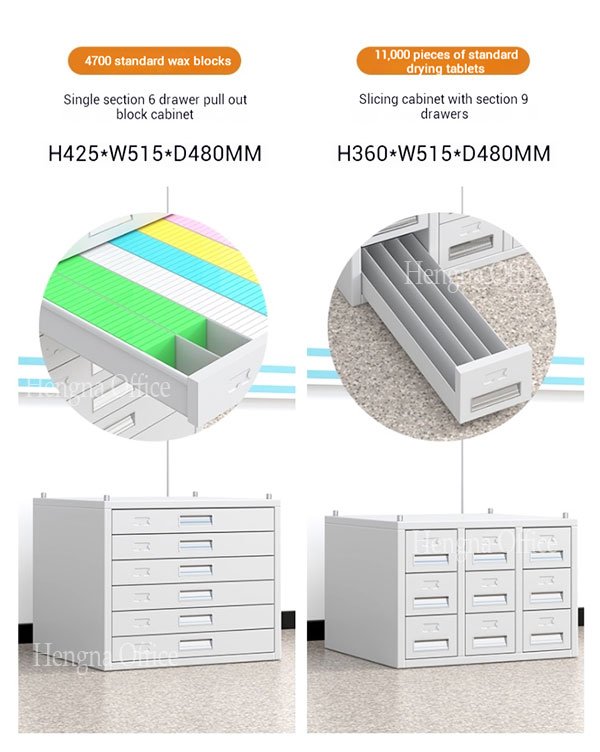
Let’s be honest: most pathology labs are drowning in slides. You’ve got decades of cases stacked in aging cabinets, new specimens arriving daily, and a surgeon calling for a 12-year-old slide “ASAP.” Meanwhile, your storage room is overflowing, your staff are juggling retrieval requests between sign-outs, and an accreditation audit is scheduled for next month. Choosing a slide archiving system isn’t about buying metal shelves—it’s about solving real operational headaches: lost slides, delayed reports, compliance gaps, and wasted labor hours. After speaking with lab managers across academic hospitals, community clinics, and reference labs, one thing is clear: the best systems aren’t the flashiest—they’re the ones that disappear into your workflow while keeping every slide findable, protected, and traceable. Here are the five practical factors that actually move the needle—no marketing fluff, just what impacts your day-to-day.How to Choose the Right Pathology Slide Archiving System? 1. It Has to Fit—Now and in Five Years Don’t just measure your walls—measure your growth trajectory.Many labs pick a system based on today’s volume, only to outgrow it within two years. Suddenly, you’re stacking boxes in hallways or renting off-site storage (which defeats the purpose of quick access). Ask: Look for modular designs—like mobile shelving units or stackable carousels—that let you scale incrementally. If you manage over 50,000 slides, consider high-density or semi-automated options early. Retrofitting later costs far more than planning ahead. Pro Tip: High-density mobile shelving can double your storage capacity in the same footprint—ideal for space-constrained labs. 2. Retrieval Speed = Diagnostic Speed If it takes 8 minutes to find a slide, that’s 8 minutes a pathologist isn’t diagnosing. In busy labs, retrieval delays cascade into report backlogs and clinician frustration. System Type Avg. Retrieval Time Best For Manual Cabinets 3–10 minutes Small labs (<5,000 slides) Carousel Systems 30–90 seconds Mid-sized hospital…
January 18, 2026
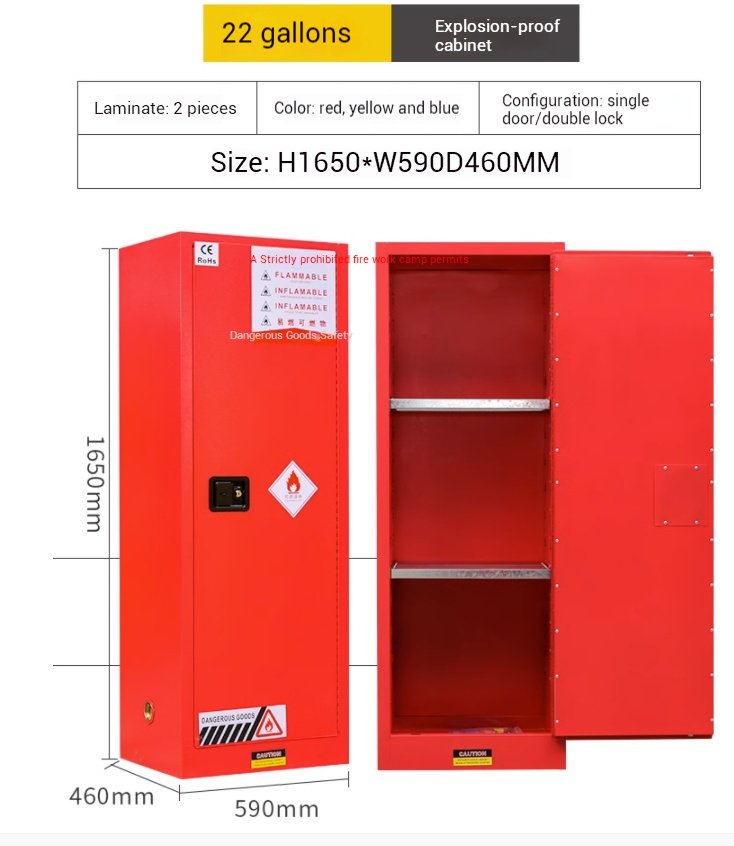
In industrial manufacturing, research laboratories, and medical facilities, the storage of flammable liquids is not just a matter of organization—it is a critical safety requirement. Among the various sizes available, the H1650mm single door flammable cabinet has emerged as a preferred choice for facilities needing a high-capacity, space-saving solution. This guide explores the technical specifications, security features, and international standards that make these cabinets an essential investment for your workplace. 1. Understanding the Dimensions: Why H1650mm Matters The specific dimensions of this model—Height 1650mm, Width 590mm, and Depth 460mm—offer a unique vertical storage profile. Unlike wider 45-gallon or 60-gallon cabinets, this slim design allows it to be placed in narrow aisles or beside workstations where floor space is at a premium. With a 22-gallon capacity, it provides ample space for a significant volume of chemical containers while maintaining a small footprint. H1650mm Single Door Flammable Cabinets Technical Specifications At-A-Glance Feature Specification Height 1650 mm Width 590 mm Depth 460 mm Capacity 22 Gallons Shelving 2 Laminate pieces Door Type Single door with double lock configuration 2. Key Structural Features for Maximum Protection A high-quality flammable cabinet is more than just a steel box. It is an engineered safety system designed to withstand extreme heat and prevent the ignition of internal vapors. Three-Point Linkage and Thickened Locking Bolts Security is paramount when storing hazardous materials. These cabinets utilize a three-point linkage system combined with thickened locking bolts. Uninterrupted Piano Hinges One often overlooked feature is the hinge system. This model features uninterrupted piano hinges (also known as continuous hinges). 3. Safety Standards and Certifications When purchasing a cabinet for industrial use, you must ensure it meets recognized international safety standards. Compliance protects your facility from both fire hazards and legal liabilities. 4. Selecting the Right Color for Your Chemicals While the…