
 Email:sarahhnl@atoolcabinet.com
When Steel Is the Wrong Choice
Walk into any lab that stores hydrochloric acid, sulfuric acid, or sodium hydroxide long enough, and you will see the same story: coated steel cabinets that looked fine on day one start to show rust blooms around the door edges within a year or two. Acids eat through powder coating at the scratches, and once that happens, the cabinet is on borrowed time.
For labs that work with aggressive corrosives every day, a 90-gallon polypropylene cabinet removes that problem at the material level. This 340L unit is molded from 10mm virgin PP resin, so there is no coating to scratch and no metal underneath to corrode. It simply does not react with the chemicals it holds.
What 340 Liters Actually Holds
The cabinet stores 18 standard 4L acid bottles plus 30 lab kits side by side, with room to stack taller containers on the top shelf. Two rib-reinforced shelves adjust in 25mm increments, so you can move them up or down to fit carboys, 5-gallon jerry cans, or rows of reagent bottles without wasting vertical space. Each shelf carries up to 60kg, enough for two full 20L glass carboys.
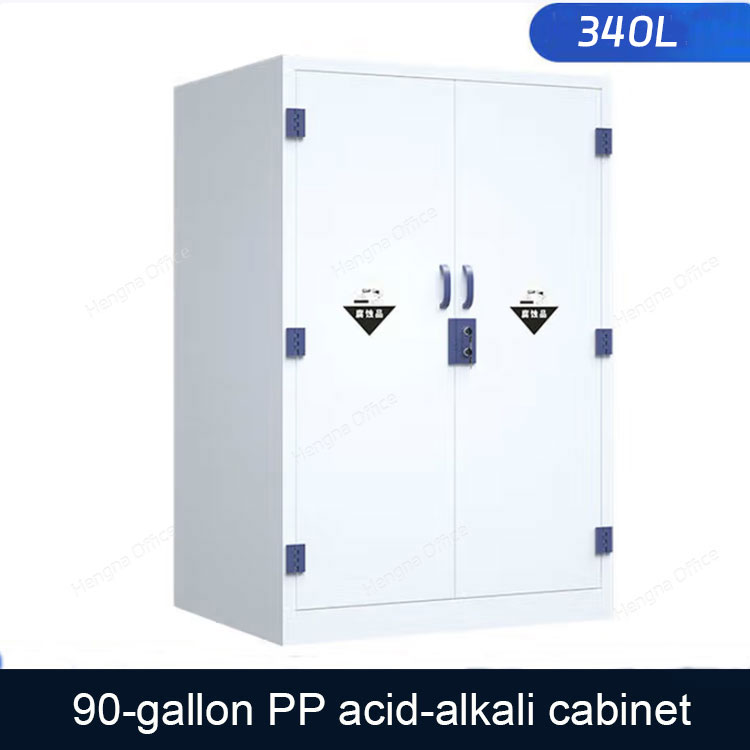
| True capacity | 340 liters (90 US gallons) |
| Material | 10mm virgin PP resin, UV-stabilized |
| Shelf load | 60kg per shelf, 25mm height adjustment |
| Door type | Manual double doors, anti-static handles |
| Dimensions | 1650(H) 脳 1090(W) 脳 860(D) mm |
| Vision panel | Blue PP window on each door |
| Locking | Double lock, two keys |
| Compliance marking | GHS corrosive hazard label + red warning sticker |
Safety Features That Matter When Things Go Wrong
Leak containment
A 12mm molded spill lip runs around the base of the cabinet and holds up to 1.5L of leaked liquid, so a cracked bottle does not turn into a floor-wide cleanup. The base tray is welded as one piece with the body, so there are no seams for acid to work its way through.
See-through inspection
Both doors carry a blue PP vision window. You can check bottle levels, shelf condition, and signs of leakage without opening the doors, which means less exposure to fumes and less disturbance of stored chemicals.
Restricted access
The double lock keeps casual hands out. In a university lab where students rotate through, or in a hospital storeroom where supplies are shared, a locked cabinet is the difference between “stored safely” and “stored conveniently.”
Static and vapor management
Anti-static handles reduce static buildup on a surface that can hold solvents as well as acids. Optional vent ports let you connect passive or active ventilation for fume extraction, and the louvered base vents keep air moving under the cabinet.
Four Environments That Wear Out Steel Cabinets
University chemistry labs
Teaching labs store small bottles of many different acids. The adjustable shelves and 340L capacity fit a semester’s worth of reagents, and the lock keeps inventory accountable.
Battery manufacturing plants
Electrolyte handling produces sulfuric acid exposure daily. A PP cabinet placed at the charging or assembly line keeps the corrosive within arm’s reach but safely contained.
Hospital pathology departments
Fixatives and staining solutions include hydrochloric acid and formalin-based mixes. The wipe-clean PP surface and spill tray make routine sanitation simple, and the vision window means staff can check stock without opening the door.
Water treatment facilities
Operators handle acid for pH adjustment and cleaning. A 90-gallon cabinet in the chemical room consolidates storage, keeps containers off the floor, and contains drips before they reach concrete.

PP Cabinet or Steel Safety Cabinet: Which One?
Both have a job to do, and they are not interchangeable.
- Steel flammable safety cabinets (yellow, red, or blue) are the right choice for flammable and combustible liquids. Their double-wall steel construction with a 38mm insulating air gap gives a 10-minute fire rating, which is what OSHA and NFPA 30 ask for when flammable liquids are stored.
- PP acid cabinets are the right choice for corrosives. PP does not carry a fire rating, but it holds up against acids that would eat through a steel cabinet’s coating in months.
Many labs run both side by side: flammables in the steel cabinet, corrosives in the PP cabinet, with labels and GHS pictograms making the split obvious to everyone on the floor.
Daily Use and Maintenance
Cleaning is a damp cloth job. The non-porous PP surface does not absorb spills, and most residues wipe off with water. Check the spill tray monthly, tighten shelf clips when you rearrange loads, and keep the vision windows clear so the inspection habit stays easy.
At end of life, the cabinet is 100% recyclable PP (SPI code 5). Contact your local plastic recycling facility rather than sending it to landfill.
FAQ
What is the real capacity in liters? 340 liters, measured to the top of the cabinet. It is sized around standard 4L chemical containers, which is what most labs actually store.
Can the shelves hold glass carboys? Yes. Each shelf is rated for 60kg, which covers two full 20L carboys with margin.
Does this cabinet work for flammable liquids? No. For flammables, use a steel safety cabinet with a fire rating. This unit is for corrosive acids and alkalis.
Can I add ventilation? Yes. The cabinet has optional vent ports for passive or active fume extraction, configurable at the factory.
What sizes are available? The PP acid cabinet line runs from 4 to 90 gallons. If 340L is more than you need, the 22, 30, 45, or 60-gallon models use the same material and safety features.
Ready to replace the rusting steel cabinet in your chemical storeroom? The 90-gallon PP cabinet ships as a complete unit with keys, GHS labels, and setup instructions. OEM and ODM customization is available for shelf counts, colors, and door configurations. Contact Hengna Office Furniture for pricing and lead times.