
 Email:sarahhnl@atoolcabinet.com
Microscope Slides Deserve Better Than a Cardboard Box
Every histology lab has the same problem hiding in a drawer somewhere: cardboard slide boxes stacked ten high, labels peeling, and somewhere in the middle a slide that took three days to prepare has developed a crack along its edge. When you need it for a diagnosis, you cannot find it. When you find it, it is damaged. When it is damaged, you start the whole process over.
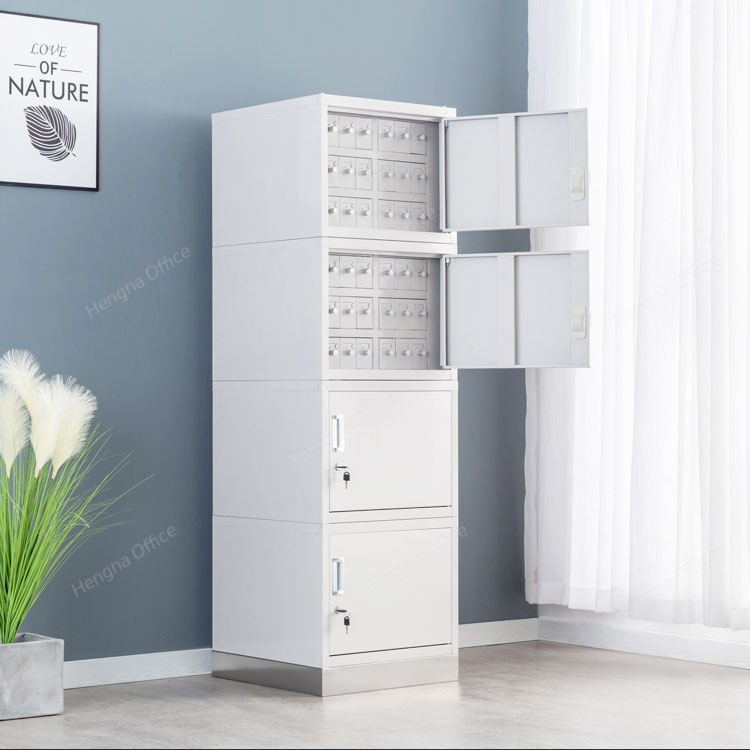
A dedicated microscope slide cabinet solves all three problems at once. This 18-drawer unit from Hengna Office Furniture holds up to 56,592 standard slides, locks each tier independently, and keeps the slides vertical, dust-free, and stable for decades of daily use.
56,592 Slides: The Math That Ends Box Stacking
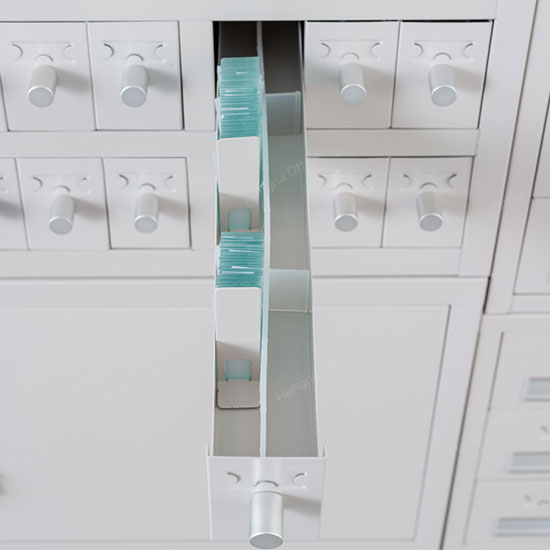
The cabinet stores slides vertically instead of flat, which is the difference between a storage system and a storage problem.
- 18 drawers across 4 lockable tiers 鈥?each tier holds 4 drawers
- 14,148 slides per tier 鈥?vertical insertion, 7.8cm slide length
- 56,592 slides total 鈥?the full cabinet, enough for a busy pathology department’s multi-year archive
- 40% less floor and bench space than flat cardboard-box storage for the same count
Each drawer accepts standard 75脳25mm and 78脳25mm slides. Adjustable dividers handle non-standard lengths from 4.5cm to 8.5cm, so stained slides, smears, and larger mounts all fit without modification.
Four Tiers, Four Locks, One Chain of Custody
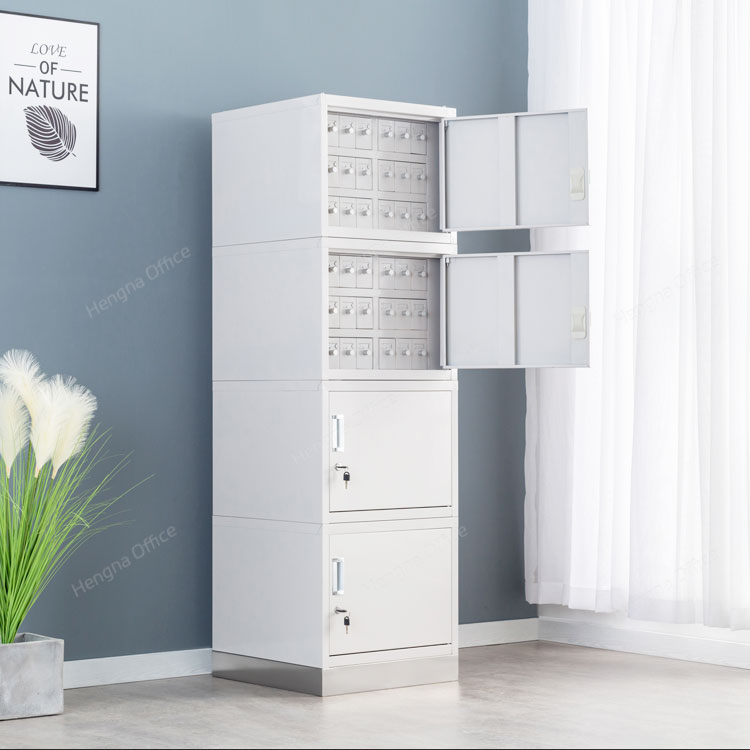
Not all slides are equal. Forensic evidence, pending-case material, and reference archives have legal and clinical weight. This cabinet gives each of the 4 tiers its own independent lock, so you can:
- Lock the reference archive while the working tier stays open
- Restrict access to evidence slides without locking down routine workflow
- Assign one tier per technician or per case batch for clean accountability
The reinforced steel body resists impact, and the locking mechanism is tamper-resistant rather than decorative. In a hospital setting, that is the difference between a storage unit and a controlled-access archive.
Humidity Control That Does Not Rely on a Dehumidifier
Slides stick together when humidity is wrong. The classic failure mode: a slide box stored against an exterior wall picks up moisture, and the next time someone pulls a slide, the cover slip comes off with it.
This cabinet’s nano-ventilation grooves run behind every slot and hold the interior in the 45-55% relative humidity range. Air moves through the cabinet without letting dust in, so slides stay separated and dry in climates where a standard cabinet would trap moisture. For labs near the coast or in humid regions, this feature alone is the reason to choose a ventilated cabinet over a sealed box.
Compact Footprint, Stable Center of Gravity
The cabinet measures 515mm deep 脳 540mm wide 脳 1700mm high. That footprint fits beside a lab bench, in a narrow aisle, or against the wall of a corridor archive. The base is raised to keep the cabinet off floor moisture and make cleaning underneath routine.
Weight distribution is engineered so the cabinet stays stable even when only one side of a tier is loaded. Fully loaded, the cabinet is heavy; it does not tip, and the drawers do not bind under load.
Numbered Slots: Find Any Slide in Seconds
Every slot is numbered. A technician who stores slides by accession number can locate any slide without pulling drawers at random. Slides stay vertical, which means no edge chipping from slides sliding against each other in a flat box, and no adhesive labels peeling off in a pile.
For a lab that processes hundreds of slides a week, the retrieval time saving is real: seconds per slide, minutes per batch, hours per year.
Who Buys an 18-Drawer Slide Cabinet
Hospital pathology departments
Staining, review, and archive all happen in one flow. The 4-tier lock structure fits a department where residents, pathologists, and lab assistants share space but not access levels.
University research centers
Student slides, faculty reference sets, and ongoing projects share one room. Numbered slots and independent locks keep projects separated and protected between semesters.
Forensic evidence storage
Evidence slides need controlled access and a clear chain of custody. Independent locks per tier support both, and the steel body provides physical protection that cardboard cannot.
Hospital histology and reference labs
Reference labs hold archives that grow by tens of thousands of slides. The 56,592-slide capacity and vertical organization keep a decade of material in one cabinet with room to spare.
Cabinet vs. Cardboard Boxes: The 5-Year Comparison
| Cardboard slide boxes | 18-drawer steel cabinet | |
| Capacity per footprint | Low, stack-dependent | 56,592 slides in 0.28 m虏 |
| Slide damage | Edge chipping, cover slip loss | Vertical slots, no edge contact |
| Humidity | Traps moisture, slides stick | 45-55% RH nano-ventilation |
| Security | None | 4 independent locks |
| Retrieval | Search through stacks | Numbered slots, seconds to find |
| Long-term cost | Boxes replaced every few years | One-time purchase, decades of use |
How to Size a Slide Cabinet for Your Lab
Before you buy, do the math in three steps. First, count slides produced per year. A pathology lab that cuts and stains 400 slides a week produces roughly 20,000 a year. Second, decide how long you must keep them. Most labs keep routine slides 5-10 years and reference material indefinitely. Third, multiply the two numbers: 20,000 per year times 7 years of retention is 140,000 slides, which means three of these cabinets with room to spare, or one cabinet per subspecialty.
Then ask three practical questions. Does your region have high humidity? If yes, the nano-ventilation interior matters more than drawer count. Do you need access control? Forensic and QA material wants the independent locks. Is floor space tight? The 515脳540mm footprint fits where a wide flat cabinet cannot. Answer those three and the right configuration picks itself.
Switching from Cardboard Boxes Without Losing Your Mind
Migration is a weekend project if you do it in the right order. Start with the newest slides and work backward; old material is lower priority and causes the least regret if reorganized later. Assign each drawer a range of accession numbers and write the range on the drawer face before loading. Use the numbered slots exactly as numbered, and keep a simple spreadsheet mapping ranges to drawers until the habit settles.
Slides that are already damaged, cover-slipless, or obsolete should be culled during migration, not moved. A cabinet full of junk is still a junk archive, just tidier. One weekend, one cabinet, and the box towers disappear from the bench for good.
FAQ
How many slides fit in the whole cabinet? 56,592 standard slides: 14,148 per tier across 4 tiers, inserted vertically. The 56,600 figure used in the product title is the rounded capacity.
Do non-standard slides fit? Yes. Adjustable dividers accept slides from 4.5cm to 8.5cm long. Standard 75脳25mm and 78脳25mm slides fit the fixed slots.
How does the cabinet stop slides from sticking in humid conditions? Nano-ventilation grooves behind each slot keep the interior at 45-55% RH, preventing moisture adhesion without letting dust settle on the slides.
Can each tier be locked separately? Yes. Each of the 4 tiers has its own lock, so access can be controlled per tier without locking the whole cabinet.
What are the cabinet dimensions? 515(D) 脳 540(W) 脳 1700(H) mm. Drawer tiers measure 515(L) 脳 540(W) 脳 405(H) mm each.
Can this cabinet be customized? OEM options include drawer count, lock configurations, and color. Contact Hengna Office Furniture with your requirements.
If your lab is still stacking cardboard boxes in a corner, this cabinet pays for itself in slides saved and hours recovered. Contact Hengna Office Furniture for specifications, pricing, and lead times.