
 Email:sarahhnl@atoolcabinet.com
Paraffin Blocks Are the Archive Nobody Can Recreate
When a tissue sample is embedded in paraffin, it becomes the permanent record of that case. The original biopsy is gone; the block is what remains. Lose it, mix it up, or let it degrade, and no amount of re-staining brings it back. Yet in many pathology departments, paraffin blocks live in unmarked drawers, stacked envelopes, and boxes labeled with a Sharpie that faded two moves ago.
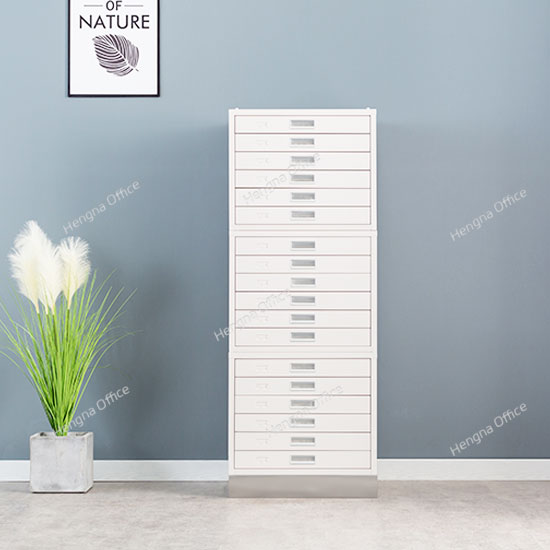
The Model 515 6-drawer paraffin block cabinet is built to end that. It stores up to 13,356 standard 7mm wax blocks in six drawers, keeps them vertical and separated, and puts every block one drawer and one row away from your hand.
13,356 Blocks: Real Capacity, Real Numbers
Each drawer module measures 515(L) 脳 480(W) 脳 425(H) mm and holds 4,452 paraffin blocks stored vertically at 7mm thickness. Three stacked sections bring the total to 13,356 blocks in a cabinet that stands 1350mm high.
- 4,452 blocks per drawer 鈥?vertical storage, 7mm standard block thickness
- 6 drawers in 3 stacked sections 鈥?1,350mm overall height, reachable without ladders
- 13,356 blocks total 鈥?roughly 3-5 years of a mid-size histology lab’s output
- 515 脳 480 mm drawer footprint 鈥?standard lab counter depth, no special clearances
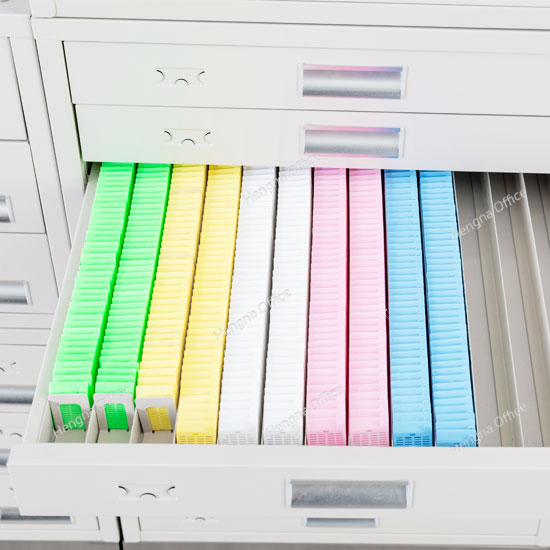
Blocks stored vertically do not stick together, do not crush each other, and do not shed paraffin flakes into neighboring samples the way stacked envelopes do.
White, Smooth, and Built for Cleaning
The Model 515 is finished in classic white with a smooth, non-porous surface. Paraffin residue, reagent dust, and fingerprint smudges wipe off with a damp cloth. In a histology lab, where the same bench handles fixatives and stains, that cleanability is not a convenience; it is a contamination control measure.
Construction is all steel, built for the daily rhythm of drawer opening and closing that a busy pathology room puts on storage furniture. The drawers glide smoothly with user-friendly handles, and the interior compartments keep blocks upright and in place even when a drawer is half empty.
Organized by Design, Not by Willpower
The cabinet’s internal compartments are sized for standard paraffin blocks, so organization survives contact with reality. Assign drawers by year, by case range, or by subspecialty, and label the drawer faces. Because blocks stand vertically in defined rows, a block returns to its exact slot instead of getting shoved back into a pile.
For departments that also keep the corresponding glass slides, the Model 515 pairs naturally with a microscope slide cabinet: blocks in one unit, slides in the other, both organized by the same accession numbering.
Where the Model 515 Earns Its Keep
Hospital pathology departments
Routine biopsies, resections, and referral cases generate blocks weekly. The 13,356-block capacity holds several years of material, and the six-drawer layout keeps current-year and archive blocks separated without a second cabinet.
Medical research labs
Animal studies and tissue banks produce blocks in batches. Drawer-per-study-group organization keeps cohorts cleanly separated and retrievable for follow-up staining.
University histology and cytology departments
Teaching collections and student work share space. The compact 1350mm height fits standard rooms, and the steel construction survives student traffic.
Forensic and reference archives
Long-term sample retention demands predictable storage. Vertical block storage with defined compartments minimizes handling damage over decades of retrieval cycles.
Wax Blocks and Slides: The Two-Cabinet System
Paraffin blocks are the archive; the slides cut from them are the working copy. Departments that store both benefit from pairing the Model 515 with a slide cabinet using the same accession-number logic. Block 12-3456 lives in drawer 3, row B; its slides live in the slide cabinet under the same number. Two cabinets, one numbering system, zero hunting.
That pairing also matters when a case needs review: pull the block for recuts, pull the slide for the microscope, and both come back to their numbered homes.
Wax Block Care: The Habits That Protect the Archive
The cabinet protects blocks from physical damage; the lab protects them from everything else. Keep the storage area away from direct sunlight and heat sources, because paraffin softens above its melting range and a block that sags is a block that was once a perfect archive sample. Label every block at embedding time with case number, not with color codes that only the person who invented them understands. Color systems die when staff rotate; accession numbers do not.
For long-term retention, avoid overloading drawers beyond their rated weight, close drawers fully after use, and do a quarterly spot check on a random drawer. The goal is simple: every block in the same place it was put, every time someone opens a drawer.
What to Check Before You Buy Any Paraffin Cabinet
Three things separate a real paraffin block cabinet from a drawer unit that happens to hold blocks. First, compartment sizing: the compartments should be built for standard 7mm blocks, not generic drawer dividers. Second, drawer action: smooth-glide drawers with handles that work when hands are gloved. Third, cleanability: a non-porous, wipe-down finish, because paraffin residue and reagent dust settle on everything in a histology room.
The Model 515 covers all three, which is why it earns its place in hospital pathology rooms, research tissue banks, and university departments that expect their cabinets to outlast their grant cycles.
Model 515 vs. Flat Trays and Envelopes
The alternatives to a block cabinet all share the same weakness: they store blocks flat and loose. Flat trays let blocks slide into each other, chipping corners that later cause uneven sectioning. Envelopes hide the blocks inside; finding one means flipping through the stack, and the paraffin softens and sticks in warm rooms. Neither method protects the block face, which is the part that matters when a microtome blade meets it.
Vertical compartment storage eliminates all three problems. Blocks stand on edge, separated by dividers, with the accession number visible without moving anything. That is the difference between an archive you can audit and a pile you can only hope is complete.
FAQ
How many paraffin blocks fit in the Model 515? Up to 13,356 blocks: 4,452 per drawer across six drawers, stored vertically at 7mm block thickness.
What are the drawer and cabinet dimensions? Each drawer module is 515(L) 脳 480(W) 脳 425(H) mm. The stacked cabinet stands 1350mm high.
Do thicker or non-standard blocks fit? Standard 7mm blocks fit the defined compartments. Contact us for custom compartment configurations.
Is the cabinet easy to clean? Yes. The non-porous white surface wipes clean with a damp cloth and resists paraffin residue and stains.
Can this cabinet be combined with slide storage? Yes. It pairs with Hengna microscope slide cabinets using the same accession-number organization.
Can I order custom configurations? OEM options include drawer counts, compartment layouts, and colors. Contact Hengna Office Furniture with your requirements.
How should blocks be labeled for long-term storage? Use the case or accession number at embedding time. Number-based systems survive staff changes and pair directly with the drawer-row organization.
Is there a weight limit per drawer? Yes. Avoid exceeding the recommended weight limit per drawer to keep the glide action smooth and the alignment true over years of use.
If your paraffin blocks are still in Sharpie-labeled envelopes, the Model 515 turns a liability into an archive. Contact Hengna Office Furniture for specifications, pricing, and lead times.