
Red, Yellow, or Blue? How to Choose a 90-Gallon Flammable Storage Cabinet
Start with the color guide:
| Color | Stores | Typical Liquids | Common Use |
|---|---|---|---|
| Yellow | Flammable liquids | Gasoline, alcohol, acetone, thinner | Paint booths, auto shops |
| Red | Combustible liquids | Paint, ink, lubricant, vegetable oil | Print shops, furniture factories |
| Blue | Corrosive liquids | Sulfuric acid, hydrochloric acid, sodium hydroxide | Labs, electroplating plants |
Capacity comes first. Color comes next. Pick the wrong color, and you create a safety risk.
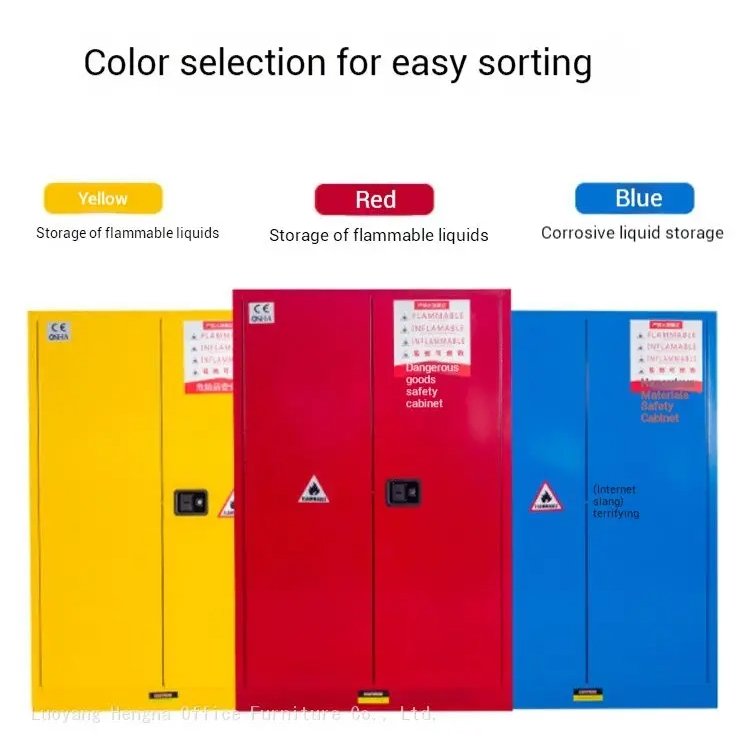
Yellow Cabinets: Liquids Below 37.8°C Flash Point
Gasoline flashes at minus 43°C. Alcohol at 12°C. Acetone at minus 20°C. These liquids give off vapors at room temperature. One spark, and they ignite.
OSHA 29 CFR 1910.106 and NFPA 30 both use yellow to mark flammable liquids. Safety inspectors spot a yellow cabinet from across the shop floor. They know what is inside.
Paint spray booths, parts washers, and mixing stations use yellow cabinets by default.
Red Cabinets: Liquids Above 37.8°C Flash Point
Paint usually flashes between 38°C and 60°C. Motor oil above 160°C. Vegetable oil above 300°C. These liquids do not ignite easily at normal temperatures. But prolonged heat or exposure still creates risk.
Red cabinets store these materials. Print shops open drums of ink every day. Furniture plants use solvent residue for cleanup. Both go into red.
The mistake we see most often: storing paint and thinner in the same cabinet.
Thinner has a low flash point. It belongs in a yellow cabinet. Paint has a higher flash point. It belongs in red. Mixing them in one cabinet violates both rules.
Blue Cabinets: For Acids and Bases Only
Sulfuric acid eats through standard steel in months. Hydrochloric vapor corrodes hinges and locks slowly. You notice the door does not close anymore. By then, the whole cabinet is ruined.
Blue cabinets have corrosion-resistant coatings on the walls. Shelves come with polyethylene trays. This structure is built differently from yellow and red.
Labs, electroplating lines, and water treatment stations need blue cabinets. No exceptions.
Two Numbers on the MSDS Sheet Tell You the Color
Not sure which color you need? Open the MSDS (Material Safety Data Sheet). Look for two numbers:
Flash Point: Below 37.8°C → yellow. Above 37.8°C → red.
Corrosivity: Marked “Corrosive” → blue.
Both numbers sit on the first few pages.
Three Common Mistakes
Mistake 1: Picking by looks
Color is a safety standard, not decoration. Yellow, red, and blue cabinets have different internal structures and ventilation designs. Wrong color means wrong protection.
Mistake 2: Mixing chemicals in one cabinet
Even when the color is right, do not mix contents. Acids and bases react with each other. Some solvents generate heat when combined. One cabinet, one chemical class.
Mistake 3: Focusing on capacity before color
A 90-gallon cabinet holds a set number of drums. That is math. Whether those drums match the cabinet color is safety. Set the color first. Then count the drums.

FAQ
Q: Can I store alcohol in a red cabinet?
No. Alcohol flashes at 12°C, far below 37.8°C. It must go in a yellow cabinet. Red is a downgrade and a violation.
Q: Can I store paint in a blue cabinet?
Not recommended. Paint is not corrosive. Putting it in blue is a mismatch. Unless the paint formula contains strong acid or base components, choose red.
Q: What if I do not have an MSDS sheet?
Ask your supplier. It is a legal obligation. Any supplier who cannot provide one is not worth your business.
Q: How many 5-gallon drums fit on one shelf?
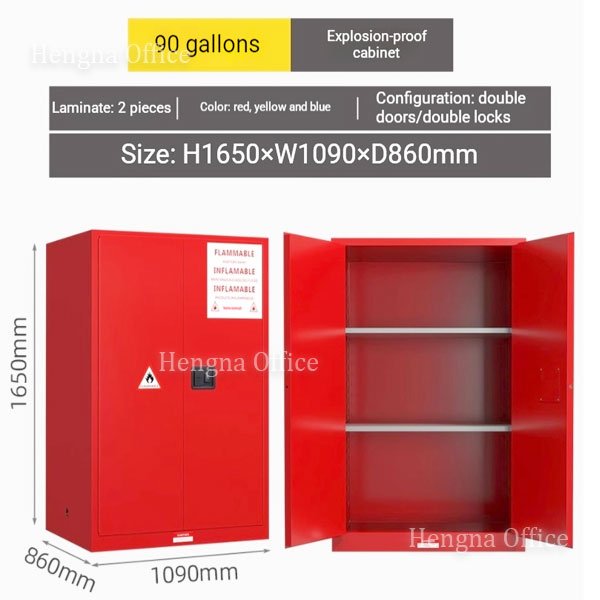
Standard setup includes two adjustable shelves. One shelf holds four to six 5-gallon drums, depending on drum shape. Round drums fit four comfortably.
Q: Do the three colors cost the same?
Usually yes. Color is a coating difference. The cost gap is tiny. Pick by storage need, not price.
Summary
One rule for picking a cabinet color: check the MSDS, match the flash point, lock the color.
Yellow, red, and blue each serve a clear purpose. Picking wrong is not just a compliance issue. It becomes a real problem when something goes wrong.
Not sure which color fits your chemicals? Send us your list and the MSDS sheets. We will match them for you.