
 Email:sarahhnl@atoolcabinet.com
Quick answer: The 22-gallon PP acid-base cabinet is a welded polypropylene storage cabinet for corrosive chemicals. The PP body does not rust or corrode on contact with sulfuric acid, nitric acid, hydrochloric acid, sodium hydroxide or potassium hydroxide, which makes it the safer storage choice over steel cabinets in acid-handling labs.
Corrosive chemicals destroy the wrong cabinet. Steel cabinets rust from the inside when acid vapors find a scratch. Wood swells and delaminates. A 22-gallon PP acid-base cabinet removes the problem at the material level: polypropylene simply does not react with the acids and alkalis that labs store every day, so the cabinet that goes in new stays intact for years.
Welded Polypropylene Construction
The cabinet body is made from high-density polypropylene chosen for broad chemical resistance. It handles strong acids — sulfuric acid, nitric acid, hydrochloric acid — as well as alkalis such as sodium hydroxide and potassium hydroxide. Vapor exposure matters as much as spills, and PP holds up against the fumes that corrode coated steel. There is no coating to chip and no base layer to rust through; the material is the protection.
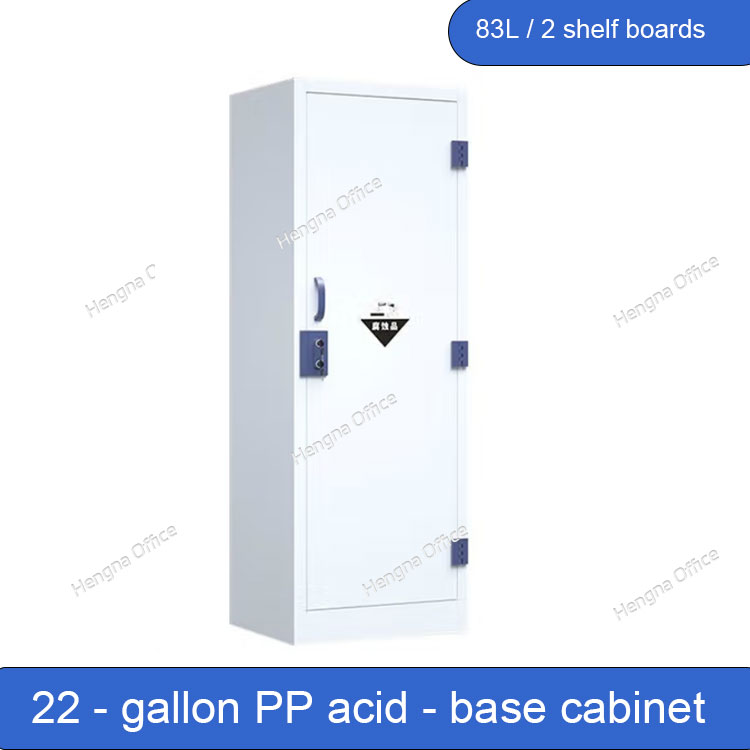
22 Gallons of Organized, Adjustable Storage
The 22-gallon capacity fits labs that handle corrosive reagents daily without jumping to a full-height 60 or 90-gallon unit. Interior shelves are adjustable, so the layout adapts to the actual container mix — small reagent bottles on one level, larger carboys on another. Adjusting the shelves keeps heavy containers low and light bottles at eye level, which is both a storage plan and a safety plan.
Safety Features That Work Together
Leak-proof sump. The cabinet base contains accidental spills inside the cabinet, keeping acid off the floor, off equipment, and away from personnel — and it makes cleanup a controlled task instead of an emergency.
Secure locking. A locking system restricts access to authorized personnel, which protects against misuse and satisfies the access-control expectations of lab safety inspections.
Clear warning labels. Corrosive-hazard labeling on the cabinet doors keeps every user aware of what is stored inside, as required for hazardous chemical storage.
Where a 22-Gallon PP Cabinet Fits
Research laboratories use it for corrosives in chemistry, biochemistry and materials science work. Industrial facilities use it for process chemicals in manufacturing and quality control areas. Schools and universities use it for the corrosives kept in teaching labs — the 22-gallon size is large enough for a curriculum stock and small enough to sit inside a prep room. For labs that need more volume, the same construction continues up the PP series: 30, 45, 60 and 90-gallon units share the same material logic.
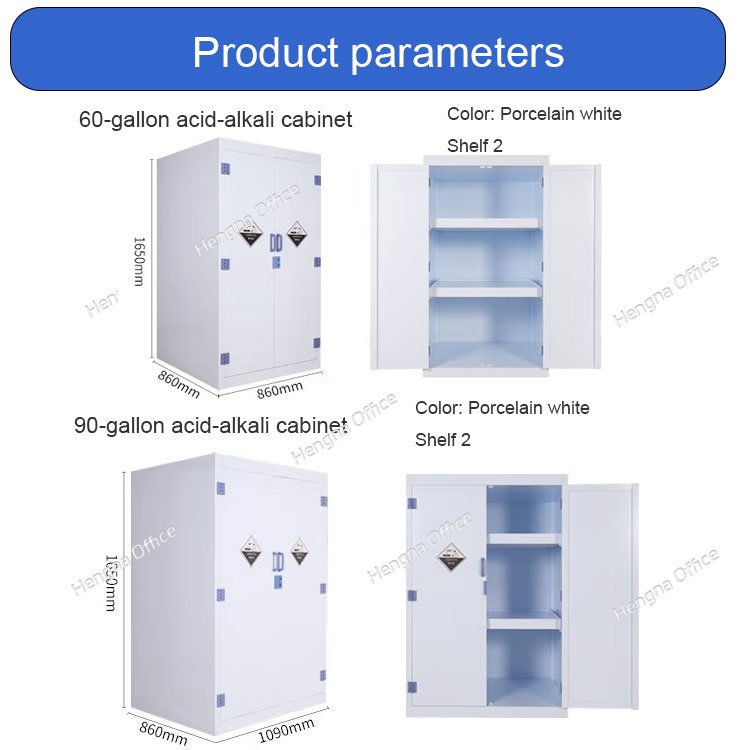
Why PP Instead of a Painted Steel Cabinet
A painted steel acid cabinet depends entirely on the paint layer staying perfect. One scratch near a door hinge, and acid vapor starts working on bare metal. PP has no coating to fail — the same material runs through the whole wall. For labs that weigh cost over a ten-year horizon, the PP cabinet usually wins because it never needs repainting and never rusts from a forgotten spill.
FAQ
Which chemicals can a PP acid-base cabinet store?
Polypropylene resists sulfuric, nitric and hydrochloric acids, sodium and potassium hydroxides, and most common lab corrosives. Send your chemical list before ordering — a few solvents are the exception, and the factory will confirm compatibility in writing.
Is 22 gallons the right size for my lab?
As a rule of thumb, size the cabinet to the largest volume you want in one place, not the largest you own. If your corrosive inventory is growing or shared between groups, step up to the 30 or 45-gallon unit in the same PP series.
Does the cabinet arrive assembled?
PP cabinets ship ready to use — position the unit, level it, load the shelves, and lock it. No assembly sequence that users can get wrong.
Where to Place the Cabinet
Put the cabinet on a level floor, close to the point of use but outside the exit path, and away from heat sources and ignition points. Corrosive storage does not belong next to a hotplate or a compressed-gas cylinder bank. Leave door-swing clearance so the lockable doors open fully — a half-open door defeats both the labeling and the sump.
Spill Containment in Practice
The leak-proof base turns a leak into a contained event. The response sequence stays the same either way: neutralize or absorb the spill in the sump following your lab SOP, inspect the sump surface for damage, and document the incident. The sump exists so the first step happens on a contained surface — not on the floor under the fume hood.
Vent Option for Daily-Access Storage
Cabinets that are opened several times a day benefit from vent ports connected to an exhaust line, which keeps vapor buildup inside the cabinet under control. For storage-only use with sealed containers, the unvented configuration is standard. Order the vent option when the cabinet sits in constant-use chemistry space.
Can a PP cabinet store flammable liquids too?
No — and that is a safety boundary, not a product limitation. Flammable liquids require a fire-rated steel flammable storage cabinet built to hold vapors and survive fire exposure. The PP acid-base cabinet is engineered for corrosives: acids and alkalis that destroy steel. Two hazard classes, two cabinet types. Keeping the separation clear is what a safety inspection looks for first.
What maintenance does a PP cabinet need?
Almost none, and that is part of the case for polypropylene. Wipe the interior and exterior with mild detergent during routine lab cleaning, inspect the sump after any spill event, and exercise the lock occasionally. No repainting, no rust treatment, no coating touch-ups — the maintenance schedule that a painted steel cabinet demands simply does not exist here.
Related reading: What Chemicals Can Be Stored in a Polypropylene Acid Cabinet? · How to Choose a 90 Gallon PP Corrosive Chemical Storage Cabinet · PP vs Steel Acid Cabinet — What 5 Years of Lab Storage Actually Looks Like
Send your chemical list and available floor space, and the factory will confirm the right PP cabinet size and configuration.