
 Email:sarahhnl@atoolcabinet.com
Quick answer: The 45-gallon PP acid storage cabinet is a welded polypropylene cabinet for corrosive chemicals and strong acids. It fills the gap between 22-gallon and 60-gallon units: enough volume for a working lab inventory, still compact enough for a prep room. The welded PP body does not corrode, so the protection never wears off.
Strong acids and alkalis are the chemicals that outlive storage equipment. A steel cabinet painted for acid service works until the first chip; after that, every day of vapor exposure works on bare metal. The 45-gallon PP acid storage cabinet takes a different route — the cabinet body is polypropylene welded from 8mm pure PP sheets with same-color welding rods, so there is no coating to fail and no base metal to rust.
45 Gallons: The Working-Lab Size
Forty-five gallons sits in the middle of the PP series — 2, 4, 22, 30, 45, 60 and 90 gallons. It is the size that fits a quality control lab or a university chemistry department that keeps a genuine corrosives inventory: enough capacity to consolidate bottles that would otherwise sit on open shelves, without committing the floor space of a 90-gallon unit. If your acid storage has outgrown a 22-gallon cabinet, this is the next step.
Welded PP Construction, No Coating to Fail
The cabinet body uses 8mm pure polypropylene sheet joined with same-color welding rods — the joints are welded, not glued, so there are no seams that solvents can open. The material resists the strong acids and alkalis that destroy painted steel: sulfuric acid, nitric acid, hydrochloric acid, sodium hydroxide and potassium hydroxide among them. Interior shelves and the spill-containment base use the same chemistry, so nothing inside the cabinet becomes the weak point.
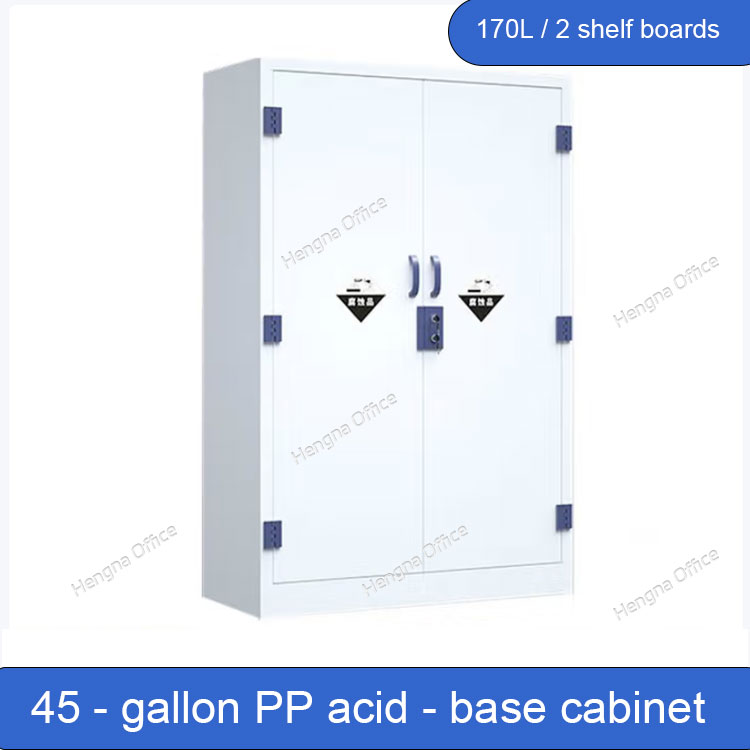
Safety and Organization Features
Adjustable shelving. Interior shelves adjust to the container mix — reagent bottles, carboys and waste containers rarely share a shape. Organized shelves also keep incompatible chemicals separated, which is a storage-safety requirement, not a convenience.
Spill containment. The base sump holds accidental spills inside the cabinet, so a leaking bottle becomes a cleanup task rather than a floor incident.
Locking access. Corrosives are hazardous materials; a lockable cabinet keeps access limited to trained personnel and supports safety inspection requirements.
Hazard labeling. Corrosive-class labeling on the doors keeps the contents identified for everyone who walks past.
Optional Ventilation for Vapor Control
Acid vapors accumulate even in sealed bottles. The cabinet can be fitted with ventilation ports connected to an external exhaust line, which moves vapor buildup out of the cabinet and keeps the interior environment stable. For labs storing open-frequency-use acids, ventilation is the option to order.
Where This Cabinet Is Used
Industrial facilities use it in chemical processing and metal treatment areas where strong acids are daily consumables. Research and quality control laboratories use it to consolidate corrosive reagent inventories in one locked location. Commercial cleaning operations use the same cabinet class for concentrated acidic cleaning agents. In all three cases the logic is the same: the chemicals are too aggressive for ordinary storage, and the storage equipment has to outlast them.
How It Compares in the PP Series
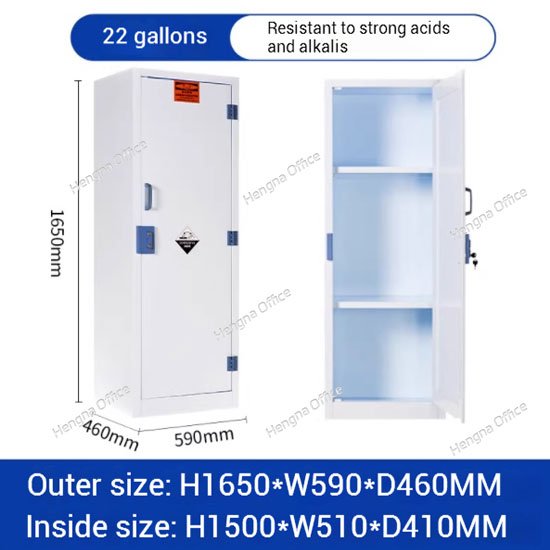
Choose the 22-gallon unit when corrosive storage is occasional. Choose this 45-gallon cabinet when corrosives are part of the daily workflow and the inventory keeps growing. Choose the 60 or 90-gallon units when multiple teams share one storage point or the chemical list keeps expanding. All sizes share the same welded PP construction, so moving up the series changes only the volume.
FAQ
Which acids is the 45-gallon PP cabinet suitable for?
Polypropylene handles sulfuric acid, nitric acid, hydrochloric acid and the common alkalis. A small group of solvents falls outside PP’s range — send the chemical list with concentrations, and the factory confirms compatibility before you order.
Can the cabinet be customized?
Yes. Shelf count, ventilation ports, locking options and external dimensions can all be specified. Custom builds are standard work for the factory, not special cases.
How is it shipped?
PP cabinets ship fully formed and protected in reinforced packaging. Inspect the outer packaging on arrival; the welded body does not require assembly.
How Many Bottles Fit in 45 Gallons?
Forty-five gallons is about 170 liters of storage volume. In practical terms that is roughly 68 two-and-a-half-liter bottles, or a mixed inventory of carboys, jugs and reagent bottles with the same total. Plan with headroom: shelves adjust, but a cabinet that arrives full on day one has no room to grow. If the inventory already exceeds 150 liters, compare this unit with the 60 and 90-gallon models in the same welded PP series.
Placement and Care
Set the cabinet on a level floor, away from heat sources and ignition points, with the door swing clear of walkways. Cleaning is simple on polypropylene: wipe with mild detergent and water, avoid abrasive pads that could dull the surface, and rinse the sump after any spill event. There is no paint layer to maintain — the material is the finish.
Is the 45-gallon PP cabinet fire-rated for flammables?
No. Polypropylene is the right material for corrosive chemicals, and the wrong material for flammable liquids — flammables require a steel, fire-rated flammable storage cabinet. Do not mix the two hazard classes in one cabinet under any circumstances. If your inventory includes both corrosives and flammables, the storage plan needs one welded PP cabinet for the acids and alkalis and one steel flammable cabinet beside it.
Does polypropylene discolor over time?
Some aggressive chemicals can tint the surface over long exposure. The discoloration is cosmetic — it does not change the material’s chemical resistance or structural integrity. If appearance matters for your lab, note it in the customization request and the factory will advise on color and sheet options.
Related reading: What Chemicals Can Be Stored in a Polypropylene Acid Cabinet? · 22-Gallon PP Acid-Base Cabinet · How to Choose a 90 Gallon PP Corrosive Chemical Storage Cabinet
Send the chemical list and the storage volume you need, and the factory will confirm the right PP cabinet size with a written compatibility answer.