
Quick answer: The PP storage cabinet with glass doors combines a corrosion-resistant polypropylene body with transparent doors, so reagents and lab supplies stay visible, organized and protected. It is built for schools and laboratories where staff need to see contents at a glance without opening every door.
Most chemical cabinets hide everything behind solid steel. That is right for hazardous stock, but wrong for the supplies a lab reaches for every hour: stains, prepared reagents, glassware, teaching demonstration sets. Searching three cabinets for one bottle wastes time and disturbs everything around it. A glass-door PP cabinet solves that with visibility — and polypropylene keeps the cabinet itself safe from the corrosive environment around it.
Transparent Doors, Organized Storage
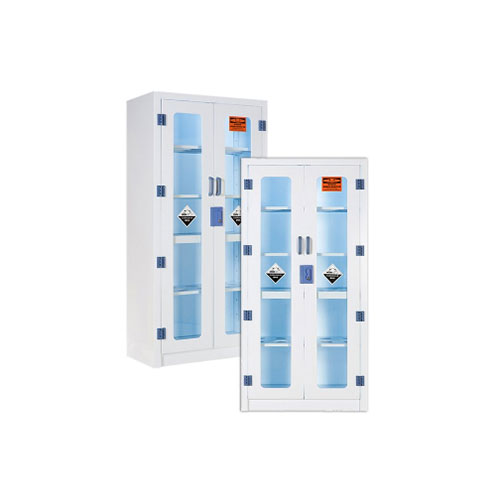
The transparent glass doors let staff identify contents without opening anything. In a school prep room, the technician confirms stock levels for the afternoon class in one glance. In a research lab, a visiting researcher finds the buffer they need without pulling four doors. Visibility also discourages the slow disorder that turns reagent shelves into archaeology — when the contents are always in view, bottles get returned to the right shelf.
Polypropylene Body for the Corrosive Environment
The cabinet body is high-quality polypropylene, a material chosen for corrosion resistance and long service life in chemical environments. Fume hoods, staining benches and acid storage are usually nearby, and vapor exposure destroys painted steel over time. PP does not rust and has no coating to chip, so the cabinet holds up next to the corrosive workflow it supports.
Secure Storage Behind the Glass
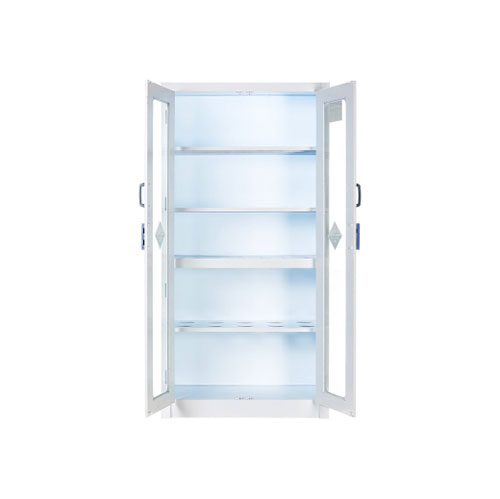
Visibility does not mean open access. The cabinet uses secure locking mechanisms so the contents behind the glass stay protected — teachers lock the reagent cabinet between classes, lab managers lock controlled supplies after hours. Glass doors show what is inside; the lock decides who can reach it.
Where This Cabinet Works Best
School chemistry prep rooms use it for demonstration reagents and class sets, where teachers need to verify stock without opening a single door. Universities use it for shared glassware and consumables in teaching labs. Research laboratories use it for non-hazardous buffers and kits that benefit from quick visual checks. It also serves hospital and workshop settings where organized, visible storage of supplies matters more than hide-everything security.
Built by the Factory, Configured for You
The cabinet is manufactured by Luoyang Hengna Office Furniture, a factory specializing in polypropylene and steel lab furniture. PP sheet thickness, shelf count, door configuration and locking options can all be specified at order time, and the production line handles single units and school-district quantities with the same tolerances.
FAQ
Is a glass-door cabinet safe for real chemicals?
It is the right choice for reagents and supplies that need visibility and moderate protection. For strongly corrosive or flammable stock, use a dedicated PP acid-base cabinet or a fire-rated flammable cabinet — the glass-door unit is the visible, everyday-access layer of the storage plan, not the hazard cabinet.
Can the shelves be adjusted?
Yes. Shelf positions are adjustable, so tall reagent bottles, microscopes and boxed teaching kits all fit. Send the items you plan to store and the factory will suggest the shelf layout.
What sizes and configurations are available?
The standard format is a floor-standing PP cabinet with double glass doors; dimensions, shelf count and lock options are configurable at order time. Bulk orders for schools and lab build-outs are supported.
How It Fits Into a School Storage Plan
In a school chemistry prep room, this cabinet holds the demonstration reagents and class sets that teachers verify before every session. The glass doors let a teacher confirm stock in seconds between periods, and the lock secures the contents until the next class. For district-level orders, multiple units can be configured identically so every prep room follows the same storage logic.
Layering Your Lab Storage
The glass-door cabinet works best as the visible, everyday-access layer of a storage plan. Hazardous corrosives belong in a dedicated welded PP acid-base cabinet, flammable liquids in a fire-rated flammable cabinet, and everyday visible supplies here. Three layers, three cabinets, zero compromise — and each layer matches the risk of what it stores.
Ordering Notes
PP sheet thickness, shelf count, door configuration and lock options are all specified at order time. Standard units suit most prep rooms; custom dimensions are available for built-in niches. School districts and lab build-out projects are supported with identical multi-unit configurations.
Care and Cleaning for the Glass Doors
Glass doors stay clear with ordinary glass cleaner and a soft cloth — avoid abrasive pads near the frame edges where the PP body meets the glass. The PP body wipes down with mild detergent. Two cleaning notes keep the cabinet looking new for years: wipe spills when they happen instead of letting reagent residue dry on the shelf surface, and keep the door tracks free of dust so the doors slide and close smoothly.
What Should Not Go Inside
Strong corrosives that demand a dedicated welded PP acid-base cabinet, and flammable liquids that require a fire-rated steel cabinet, both belong in their own rated storage. The glass-door unit is for reagents, stains, kits, glassware and supplies — the items staff access daily and benefit from seeing. Layering storage by hazard level is what keeps a prep room both organized and compliant.
Can it stand next to the fume hood?
Yes. Ambient chemical vapors in the room are exactly what the polypropylene body is built to shrug off, which is why PP cabinets are common beside fume hoods and staining benches. The glass doors are worth one extra care point: avoid direct contact with concentrated solvent drips on the door edges, and the visibility advantage lasts for the life of the cabinet.
Related reading: 22-Gallon PP Acid-Base Cabinet · Benchtop Mini Chemical Safety Cabinet (2 Gal) · How to Safely Store Strong Acids and Bases in PP Safety Cabinets
Tell us what the cabinet will store and where it will stand, and the factory will confirm the right configuration with a quotation.