
Most buyers who ask for an “explosion-proof cabinet” actually need a flammable storage cabinet. The two solve different problems, and the words get swapped in quotations more often than anyone likes to admit.
Here is the difference in plain terms. A flammable storage cabinet is built to survive a fire on the outside and keep what is inside from igniting. An explosion-proof cabinet is built so that an ignition source inside it cannot set off the vapors around it. One is about resisting fire, the other about controlling ignition. Buy the wrong one and you either pay for protection your risk does not require, or you leave the actual risk uncovered.
| Flammable storage cabinet | Explosion-proof cabinet | |
| What it protects against | External fire reaching the contents | Internal vapors igniting from a spark or heat source |
| How it works | Passive: double wall, air gap, sealed joints | Active: positive-pressure ventilation, explosion-proof electricals, static control |
| Ventilation | Not required; vent bungs stay sealed | Normally required, ducted to outdoor exhaust |
| Electrical components | None inside | Rated for hazardous locations |
| Typical use | Solvents, paints, alcohols in labs and workshops | Refrigerated storage, solvent recovery areas, spraying rooms |
| Reference standard | OSHA 1910.106, NFPA 30 | Hazardous-location wiring rules plus the same storage standards |
What a flammable storage cabinet is built to do
Its job is time. During a fire outside the cabinet, the double wall and the air gap between the walls hold the internal temperature down long enough for people to evacuate and for responders to work. OSHA 1910.106(d)(3) sets the construction: at least No. 18 gauge steel, double-walled with a 1.5-inch air space, riveted or welded joints, a three-point lock, and a sill raised at least 2 inches above the cabinet floor.
Notice what is not in that list: no fan, no wiring, no electronics. The cabinet is deliberately passive, because a fan or a thermostat inside a box full of solvent vapor is itself a potential ignition source. That is the whole design logic, and it is why a flammable cabinet should never be retrofitted with lights or powered accessories.
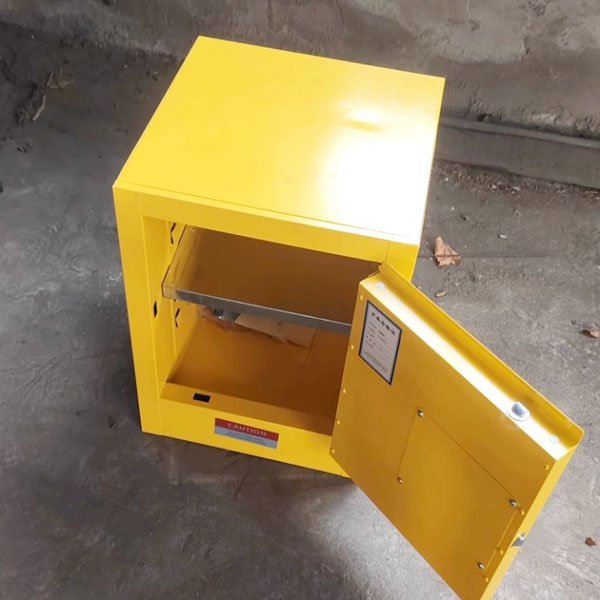
What an explosion-proof cabinet adds
An explosion-proof cabinet accepts that vapors will be present and manages them. It uses forced ventilation to keep the internal concentration below the lower explosive limit, seals and pressure relief to contain an internal event if one happens, and electrical components rated for hazardous locations rather than standard fittings.
This matters where the cabinet itself needs power or airflow. A refrigerated cabinet holding volatile samples, a solvent recovery station, a unit installed inside a spray booth — all of these bring electricity or continuous vapor generation into the picture, and a passive cabinet cannot address either.
Venting is the cleanest way to tell them apart
If a quotation includes ductwork and an exhaust fan, it is not a standard flammable cabinet, no matter what the label says. NFPA 30 does not require flammable cabinets to be vented, and opening the vent bungs without ducting them to an exhaust system makes the cabinet less safe, not more.
Explosion-proof units are the opposite case: ventilation is part of the function, not an add-on. That single point settles most of the confusion, because the two cabinets require opposite handling of the same two openings.
Which one your site actually needs
- Storing standard solvents or paints with no power inside the cabinet — a flammable storage cabinet is the correct and compliant answer.
- Needing refrigeration, lighting or instruments inside the storage space — you are looking at explosion-proof construction, or a purpose-built flammable-materials refrigerator.
- Locating the cabinet inside a classified area such as a spray booth or solvent recovery room — the electrical rating is the deciding factor, not the cabinet shell.
- Storing acids or bases rather than solvents — neither cabinet type fits; corrosives need a polypropylene cabinet, kept separate from flammables.
- Storing LPG or gas cylinders — that is a gas cylinder cabinet, a different product line with its own ventilation rules.
What to write into the specification
Whichever cabinet the risk calls for, four lines belong in the specification, because these are the ones quotations get vague about:
- The construction standard the cabinet is built to, named by number — OSHA 1910.106 or NFPA 30
- The shell detail: welded or riveted joints, double wall, air gap
- Whether vent bungs ship sealed, and whether ducting hardware is included
- For any unit with power: the hazardous-location rating of every electrical component
A quotation that answers these four lines can be compared against another one. A quotation that answers with adjectives cannot, and the gap usually surfaces after delivery, when the installer starts asking questions nobody on the buying side can answer.
Where the two get confused
Two habits cause most of the mix-ups. The first is color: not every yellow steel cabinet is compliant, and not every compliant cabinet is yellow — the color follows the chemical class, not the build quality. The second is terminology. In several supply markets, “explosion-proof cabinet” is used loosely as a synonym for any flammable storage cabinet, so a quotation can carry the phrase without the construction to match it.
The reliable way through both is documentation. Ask for the construction specification against OSHA 1910.106, and if the unit includes electrical components, ask for their hazardous-location rating. A supplier who can answer both in writing is describing a real product; one who answers with adjectives is not.
FAQ
Do I need an explosion-proof cabinet if I only store solvents?
No, as long as nothing inside the cabinet requires power and the cabinet is not sitting in a classified area. A flammable storage cabinet built to OSHA 1910.106 covers that scenario.
Can a flammable storage cabinet be vented?
It can be, but it does not have to be, and it should not be opened up without ducting both vents to an approved exhaust system. Leaving the bungs in place is the normal configuration.
Is an explosion-proof cabinet the same as a safety cabinet?
“Safety cabinet” is a general term that covers flammable cabinets, corrosive cabinets and gas cylinder cabinets. The chemical being stored decides which one you need, not the general label.
What drives the cost difference between the two?
Mainly the electrical and ventilation work: rated components, ducting and controls add material and engineering that a passive cabinet does not carry. Specifying explosion-proof protection where it is not required is one of the more common ways to overspend on a storage project.
Does an explosion-proof cabinet remove the need for room ventilation?
No. The cabinet controls what happens inside it; the room still has to meet its own ventilation requirements for the quantity of flammable liquid stored. Cabinet rating and room design are separate line items in a compliance review.
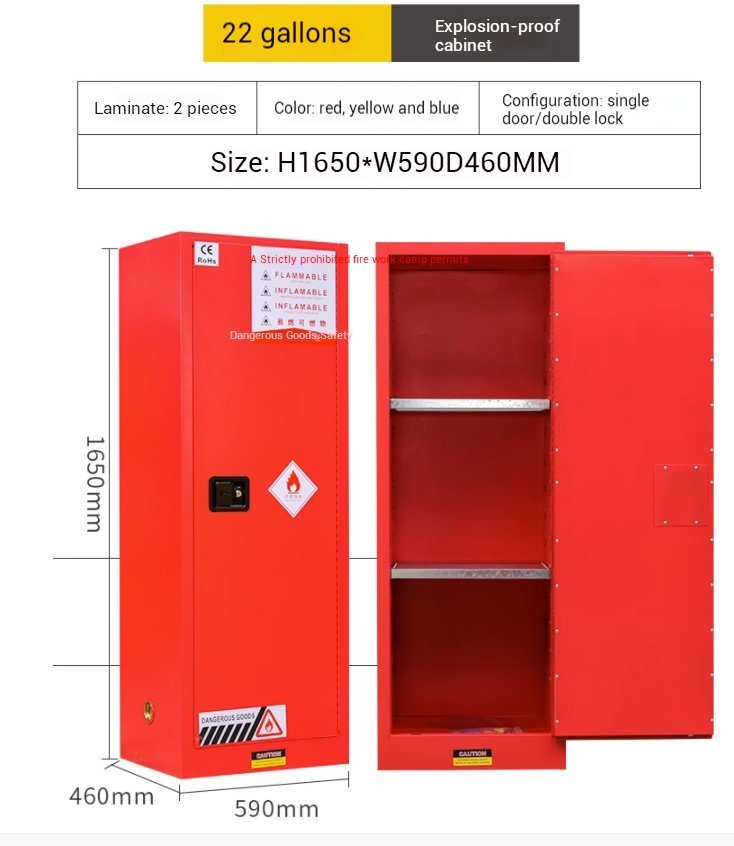
Hengna supplies flammable storage cabinets built to OSHA 1910.106 construction requirements in sizes from 22 to 110 gallons, CE marked, with single and double-door configurations. Send the chemical list and the room layout, and the cabinet selection comes back in writing within 24 hours — including a straight answer on whether the job needs explosion-proof construction or not.