
 sarahhnl@atoolcabinet.com
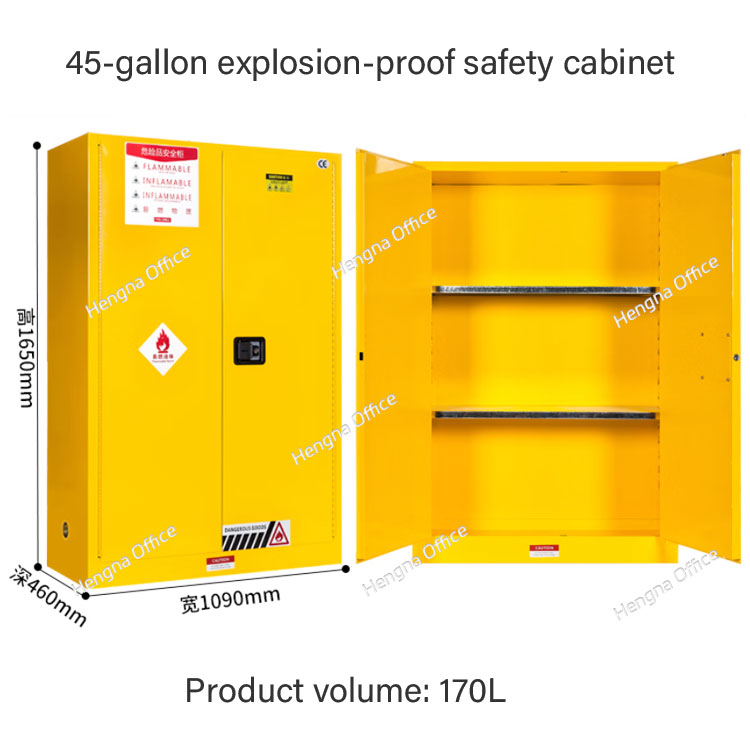
Quick answer: The 45-gallon explosion-proof safety cabinet is a double-wall steel flammable storage cabinet with a fire-resistant lining, self-closing three-point locking doors, built-in vapor ventilation ports and adjustable shelves. It holds 45 gallons of flammable liquids behind a yellow, regulation-ready steel body.
Flammable liquids are the most regulated things on any worksite shelf. Solvents, fuels, thinners and alcohol-based reagents all need to sit inside a cabinet that can survive the situation nobody plans for. This 45-gallon explosion-proof safety cabinet is built for that job — thick steel outside, fire-resistant lining inside, and hardware that closes itself when things go wrong.
Double-Wall Steel and Fire-Resistant Lining
The cabinet body is built from thick-gauge steel with a double-wall construction and a fire-resistant lining that endures high temperatures over a prolonged period. The air gap and lining work together to slow heat transfer into the storage chamber during a fire, protecting the containers inside while response teams work. Corners and joints are welded and ground, because a flammable storage cabinet is only as strong as its weakest seam.
Self-Closing Doors with Three-Point Locking
The doors close themselves. A self-closing mechanism with three-point locking keeps the doors shut against a rise in internal pressure, blocks the release of flammable vapors, and denies unauthorized access at the same time. Three-point latching locks the door at top, middle and bottom, which keeps the seal even when the cabinet is loaded unevenly.
Built-In Vapor Ventilation Ports
Flammable liquids evaporate, and the vapors are the real fire risk. The cabinet includes built-in ventilation ports designed to manage vapor buildup; when the installation calls for it, the ports connect to an external exhaust system that carries vapors to a safe discharge point. Venting is the difference between a cabinet that stores flammables and a system that manages them.
45 Gallons of Adjustable Storage
The 45-gallon chamber covers the most common working inventory: solvent bottles for a laboratory, fuel and lubricant containers for a workshop, paint and thinner stock for a finishing area. Interior shelves adjust to the container mix — small bottles up top, larger containers below — so the storage plan matches the actual bottles instead of the other way around.

Yellow Color Coding and Compliance
The bright yellow finish is the universal signal for flammable storage. Color coding lets every employee identify the hazard class from across the room, which prevents mix-ups and supports safety inspections. The cabinet is built to comply with OSHA and NFPA flammable storage requirements — the regulations that facilities in manufacturing, chemical processing and research operate under. Compliance lives in the details: self-closing doors, three-point latches, vapor ports, grounding connection and the 45-gallon limit that matches OSHA’s per-cabinet ceiling for Category 1-3 flammable liquids.
Where a 45-Gallon Cabinet Fits
Industrial facilities keep solvents, fuels and lubricants near production lines. Laboratories store flammable reagents that arrive in large containers and get used daily. Workshops — automotive, woodworking, finishing — store paints, thinners and adhesives close to the work. The 45-gallon size serves all three: a full working inventory for a lab, a meaningful buffer stock for a workshop, and a compliant single point of storage for a production floor.
FAQ
How much flammable liquid can legally go in one cabinet?
Under OSHA rules, a single approved flammable storage cabinet holds no more than 60 gallons of Category 1, 2 or 3 flammable liquids. The 45-gallon capacity stays under that ceiling while leaving room for handling. Confirm the category of your specific liquids against the safety data sheets.
Do the vents have to be connected to an exhaust?
The ports ship capped for labs that store sealed containers. When local fire code or the vapor load calls for mechanical exhaust, the ports connect to external ducting. Either way, the ports are part of the cabinet’s compliance design.
Self-closing or manual doors?
Self-closing doors are the safer default and are what many fire codes expect for flammable storage: they shut themselves during an incident even when nobody is near the cabinet. Manual-close versions exist for workflows that keep the doors open constantly, but the self-closing mechanism is the compliance-friendly choice.
Grounding and Installation
Static discharge near flammable vapors is a real ignition source, so the cabinet includes a grounding connection — attach the ground wire during installation per local electrical code. Place the unit on a level floor, away from exits and from ignition sources such as heaters and spark-producing equipment. Leave the self-closing doors full swing clearance; a door that cannot close completely defeats the three-point latch.
Monthly Self-Checks
Four checks keep a flammable cabinet compliance-ready between inspections: open the doors and confirm the self-closing mechanism pulls them shut; check the three-point latches engage in sequence; confirm the vent caps and any duct connections are clear; and verify the hazard labels are still legible. Ten minutes a month, logged. Most audit findings on flammable cabinets are door and label issues that this routine catches early.
What Not to Store Inside
Flammable cabinets are for flammable and combustible liquids. Oxidizers, acids and corrosives need their own cabinet type — storing them together inside a flammable cabinet is a code violation and a chemical reaction risk. Segregate by hazard class first, capacity second. If your inventory spans several classes, the storage plan needs one cabinet per class, and the factory can supply the matching unit for each.
How is this different from the 90-gallon model?
Construction is the same: double-wall steel, fire-resistant lining, self-closing three-point doors and vent ports. The difference is volume and the compliance ceiling that comes with it — the 90-gallon model serves facilities whose flammable inventory has outgrown the 60-gallon OSHA limit of a single cabinet or that want fewer, larger storage points. Choose 45 gallons for a single working inventory; step up to 90 gallons when consolidation across rooms or teams is the goal.
Related reading: How to Choose the Right Flammable Storage Cabinet Size: 22, 30, or 45 Gallon? · 30 Gallon Flammable Safety Cabinet · 90-Gallon Flammable Cabinet Capacity: What You Can Actually Store
Send the liquids you store and the room layout, and the factory will confirm the right cabinet size, door type and venting configuration for your compliance file.