
Pathology labs keep two different kinds of chemicals in the same room, and they need two different cabinets for them. Formalin, acids and most staining reagents are corrosive or vapor-releasing. Xylene, ethanol and acetone are flammable. A polypropylene acid cabinet handles the first group. It should never be asked to handle the second.
That one distinction is where most storage mistakes in histology departments begin — and why a lab that buys one cabinet for “all the reagents” can fail an inspection it never saw coming.
| Reagent | Hazard | Cabinet it belongs in |
| Formalin (10% neutral buffered) | Carcinogen, irritant vapor | Polypropylene cabinet with ventilation connection |
| Hydrochloric, nitric, sulfuric acid | Corrosive | Polypropylene acid cabinet |
| Glacial acetic acid | Corrosive and combustible | Confirm with EHS — usually corrosive cabinet, away from flammables |
| Xylene, toluene | Flammable (flash point near 25 °C) | Metal flammable storage cabinet, grounded |
| Ethanol, methanol, acetone | Flammable | Metal flammable storage cabinet |
| Mercuric oxide and similar | Highly toxic | Dedicated lockable cabinet, dual control |
Why formalin and xylene cannot share a cabinet
The two hazards pull the cabinet design in opposite directions. Formalin is a formaldehyde solution, classified as a Category 1B carcinogen, and its vapor has to be kept away from the people working around it — which is why formalin storage is about containment and air exchange. Xylene is a flammable liquid, and flammable storage is about fire resistance and static control.
A metal flammable cabinet is built to hold heat out and is sealed against vapor exchange; acid exposure over time attacks its steel and coatings. A polypropylene cabinet resists the acid but offers no fire rating. Put xylene in a PP cabinet and the fire requirement is unmet. Put acid in a flammable cabinet and the cabinet itself becomes the thing corroding. Separating them is not a preference — it is what each cabinet is actually certified to do.
What actually belongs in an acid cabinet
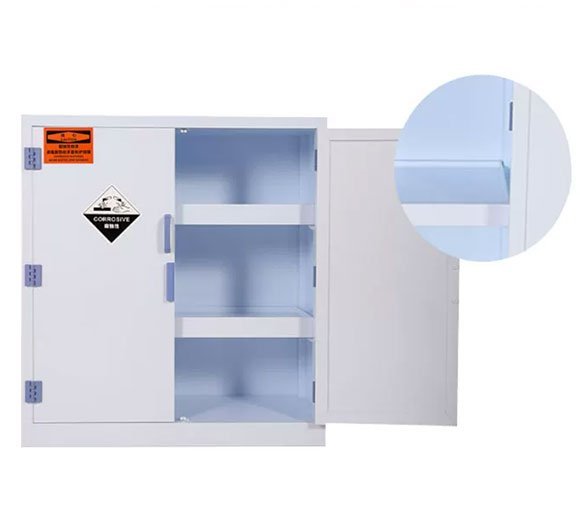
Polypropylene cabinets are the standard answer for the corrosive side of a histology workflow. The material does not react with acids or bases, and the welded or moulded shell does not have seams that a spill can creep into. In practice, a pathology department’s acid cabinet holds:
- Formalin (10% neutral buffered formalin) in stock bottles and biopsy pots
- Working dilutions of hydrochloric, nitric and sulfuric acid
- Most routine staining reagents
- Decalcification solutions, with the same compatibility check applied
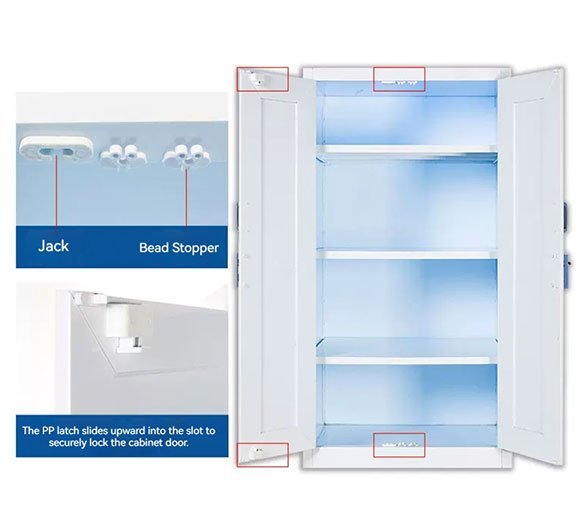
Three construction details separate a working cabinet from a decorative one. The base has a raised spill sump, so a cracked bottle stays inside the cabinet instead of reaching the floor. Shelves are adjustable and removable, so the cabinet can be reconfigured as reagent bottle sizes change. And the vent port, if fitted, is designed for a real duct connection rather than a hole with a cover over it.
What must stay out of it
Xylene, toluene, ethanol, methanol and acetone belong in a metal flammable storage cabinet that is grounded and rated for the volume stored. Highly toxic compounds such as mercuric oxide go into a dedicated lockable cabinet under dual control, not into general reagent storage. Strong oxidizers are kept apart from everything organic.
The commercial consequence of getting this wrong is not only risk. Inspectors look for the segregation first, because it is the fastest signal of whether a lab understands its own chemical list.
The ventilation numbers that decide the layout
Formalin vapor is the reason pathology storage areas are designed around air exchange rather than around shelving. Three numbers come up repeatedly in lab design guidance:
- 6–12 air changes per hour in reagent storage rooms, with the higher end for areas where containers are opened regularly
- Slight negative pressure relative to adjacent spaces, so vapor moves into the storage area rather than out of it
- Exhaust discharge at least 1.5 m above roof level, away from any air intake
Local exhaust covers the rest. A ventilated cabinet or fume hood above the grossing bench, plus a ducted connection on the formalin cabinet, keeps background concentrations below the occupational exposure limit — the OSHA permissible exposure limit for formaldehyde is 0.75 ppm as an 8-hour time-weighted average, and that figure is what air monitoring is compared against.
Temperature and placement
Most pathology reagents store comfortably between 15 and 25 °C, with flammables kept below 30 °C — the figure that shows up in cold-room and hot-climate discussions. Storage rooms should be separately sealed with fire doors where flammable quantities require it, and cabinets stay clear of heat sources and egress paths.
For formaldehyde specifically, distance matters as much as the cabinet. Air monitoring points are usually placed at breathing height near where containers are opened, not next to the cabinet, because that is where exposure actually happens.
A storage set-up that survives inspection
Auditors and accreditation assessors tend to check the same short list. Working backward from that list is the fastest way to lay out a pathology storage room:
- Reagents segregated by hazard class, with flammables physically separated from corrosives
- Each cabinet carrying an inventory list on the door, not just a hazard symbol
- Spill sumps left empty — they are containment, not extra shelf space
- Access records signed on every withdrawal, matching the dual-control procedure
- Cabinet doors closed except while a container is being handled
- Grounding verified on flammable cabinets, and the test recorded
- Eyewash, emergency shower and spill kit within the reach the standard expects
- Safety data sheets retrievable within a minute, in the language staff read
None of these are expensive. Most are procedural, and the ones that are physical — sump, grounding, door hardware — come built into a properly specified cabinet.
FAQ
Can formalin be stored in a flammable storage cabinet?
No. Acid exposure attacks the steel and the coating over time, and the cabinet’s fire rating is not the control that formalin storage needs. Formalin belongs in a polypropylene cabinet, ideally with a ducted vent connection.
Does a polypropylene cabinet have to be vented?
Not always — it depends on what is stored and on the room’s air exchange rate. For formalin, connecting the cabinet to exhaust is the common practice in new installations, because it captures vapor at the source instead of relying on room dilution.
Where should xylene be stored?
In a metal flammable storage cabinet, grounded, sized to the volume held, and separated from acids. It should not be stored in a polypropylene cabinet and should not sit in an unventilated warm room.
What is the maximum quantity of flammable liquid allowed outside a cabinet?
In most jurisdictions the answer traces back to OSHA 1910.106 — no more than 25 gallons of Category 1–3 liquids outside approved storage. Above that, a compliant cabinet or an inside storage room is required. Your local fire code may set a stricter number.
Can acids and bases share one cabinet?
Small quantities can, on separate shelves with secondary containment under each, which is the arrangement most laboratory safety guides allow. Larger volumes should be split, because a spill that mixes them creates heat and vapor that neither cabinet was sized for.
Hengna supplies polypropylene acid and corrosive storage cabinets in capacities from 4 to 90 gallons, CE marked, with adjustable shelves, base spill sumps and ducted vent connections. Send the reagent list and the room dimensions, and the cabinet selection comes back within 24 hours — including a note on which chemicals should not go into it at all.